Runway's 2026 AI Film Festival: Grand Prix to "A Face Only A Mother Could Love"
Runway's fourth AI Film Festival (AIF 2026) gave its Grand Prix to Robert Gaudette's "A Face Only A Mother Could Love", an 8-minute Paris love story; Gold went to "THE WELL" (Dorian & Daniel) and Silver to "Where Knights Fall" (Mathery). Runway posted its congratulations on 2026-06-26 with panels featuring Ron Howard and Roger Avary. The Grand Prix film also won Italy's Reply AI Film Festival.
Key facts
- Grand Prix: 'A Face Only A Mother Could Love' (Robert Gaudette); Gold: 'THE WELL'; Silver: 'Where Knights Fall'; honorees include Dave Clark's 'TAIRELL ISN'T REAL' (Hollywood.AI)
- Runway's winners post on X is dated 2026-06-26 (~21k views); the exact ceremony date was not checked
- Earlier Grand Prix: 'Total Pixel Space' by Jacob Adler (2025)
- The Grand Prix film had ~14k YouTube views on 2026-09-29
What happened
Runway's festival (started 2023) is the longest-running prize for films made with generative video. The 2026 winners favour quiet, character-driven stories over spectacle. Confidence is medium on the exact date: the festival date is taken from Runway's X post, and the uploader's video (posted 2026-04-23) was retitled as the winner later.
Why it matters
Along with the Higgsfield Global Film Festival ($1M), CapCut CRE[AI]TE, the Seoul International AI Film Festival and the Reply AI Film Festival, it shows AI film becoming a festival circuit with its own awards in 2026. The view counts are modest compared with viral AI shorts.
Changelog
- 2026-09-29: created
Videos (2)
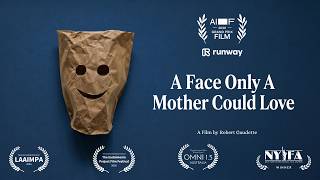
A Face Only A Mother Could Love | A Short-Film by Robert Gaudette.
Robert Gaudette AI · 2026-04-23 · ai-madeDescription by Gemini, which watched the video:
Summary
A Face Only A Mother Could Love is an AI-generated narrative short film created and directed by Robert Gaudette. Narrated with a French accent, the film follows Marcel Dupont, a disfigured 38-year-old Parisian man who collects masks, practices ballroom dancing alone in his kitchen, and unexpectedly finds connection with a woman who has secretly admired him for years.
What is shown
- [00:15 - 00:45] Introduction to Marcel Dupont, showing his facial deformity, his apartment wall lined with masks, and him dancing alone in his kitchen.
- [01:00 - 01:25] Marcel's daily routine in Paris, greeting the local baker Bernard on Rue Clément.
- [01:26 - 02:44] Flashbacks to Marcel's childhood: his father inventing "the mask game" to conceal his son's appearance, culminating in a cut-out paper bag mask before the father abandons the family.
- [02:45 - 03:15] Marcel clearing his kitchen floor each evening to waltz with an imaginary partner to vinyl records.
- [03:16 - 04:20] A Halloween night encounter in a Parisian park where Marcel, wearing a masquerade mask, converses on a bench with a masked woman for nearly four hours.
- [04:45 - 06:15] Marcel anxiously preparing for their date, arriving with flowers, but fleeing in fear upon seeing her unmasked on the bench.
- [06:23 - 07:43] Marcel returning at 8:30 P.M. in his mask; she unmasks him, explains how she watched and loved his gentleness and dancing from afar for years, and they dance together in the park and at his apartment.
Claims & numbers
The film contains narrative and fictional details rather than technical or product claims:
- Marcel Dupont is 38 years old [00:18].
- Marcel owns 41 masks [00:25].
- His father started the mask game when Marcel was 3 years old [01:34] and gave him 41 masks across 7 years [01:45].
- Marcel has practiced dancing alone for 11 years [02:59].
- Marcel's mother passed away 4 years prior to the events [03:36].
- Marcel and the woman met at 9:47 P.M. on October 31st and conversed for 3 hours and 40 minutes [03:44, 03:59].
- Marcel polished his 20-year-old boots and ironed his shirt four times before the date [04:59, 05:03].
- The woman first saw Marcel wave when she was 12 years old [06:44].
Notable quotes
- [00:29] "He owns 41 masks, a record player, and the unshakeable belief that one day someone will ask him to dance."
- [05:15] "Somewhere in the world, she said, there are people with different eyes. People who see straight through to the inside."
- [07:16] "That she had stood outside his window in the dark and listened to him dance alone. And that she had never rung the bell."
Assessment
This is a polished narrative short film produced using generative AI video, synthetic voiceover, and traditional cinematic editing. The imagery exhibits hallmark generative video traits (subtle facial texture drift, static camera motions, and controlled morphing), brought together with cohesive pacing, foley design, and character continuity.
Lyrics & themes
The film features an instrumental accordion and orchestral waltz score accompanied by third-person English narration:
- Isolation and Parental Illusion: Explores how Marcel's parents framed his condition, from his father masking him under the guise of an imaginative game to his mother assuring him he was merely a "late bloomer."
- Longing and Readiness: Marcel's relentless daily rehearsal for an imaginary partner, preparing his steps for over a decade in anticipation of being seen.
- Fear of Rejection vs. True Perception: The psychological toll of childhood bullying ("monstre, le crapaud" [04:32]) juxtaposed with genuine intimacy and unconditional acceptance.
Lore & references
- Masks / Cyrano & Phantom Archetype: The 41 masks symbolize social armor, masking physical difference while referencing classic literary parables of inner beauty (e.g., The Elephant Man, The Phantom of the Opera, Cyrano de Bergerac).
- The Paper Bag Mask: Originating as a quick three-cut paper bag made by his father, it represents both the childhood wonder given by his father and the lingering trauma of his father's sudden abandonment.
- X-Ray Vision Comic: Marcel reads a vintage comic featuring "X-Ray Vision" [05:25], reflecting his mother's promise that someone with "different eyes" would look past his exterior.
Visual style & craft
- Visual Aesthetic: Styled after classic Parisian cinema, featuring muted warm palettes, period-appropriate European architecture, mid-century vehicles (Citroën 2CV), and detailed practical costume styling.
- AI Generation & Continuity: Characters and environments exhibit generative AI rendering, with character consistency maintained across multiple ages and scenes, interspersed with close-up shot compositions to minimize spatial anomalies.
- Post-Production: Seamlessly blended with professional audio mixing, human dialogue snippets in French, dynamic foley, sound effects, and title cards.
Described by gemini-3.8-flash on 2026-09-29 from the video's audio and frames.
Total Pixel Space
Jacob Adler · 2024-12-22 · ai-madeDescription by Gemini, which watched the video:
Summary
Total Pixel Space is a philosophical essay film produced by Jacob Adler that examines the mathematical concept of digital image space—the finite yet astronomically vast coordinate space containing every possible digital image and video frame. Through synthetic retro-futuristic visuals and a calm female narration, the video contemplates the nature of time, consciousness, determinism, and the Library of Babel-like totality of digital representation.
What is shown
- [00:00–00:36] Retro living room setting with a family watching multiple television sets, followed by surreal scenes of floating exploding buildings, people walking on streets, and giant cats, introducing the inquiry into order and chaos.
- [00:37–01:17] Demonstration of how digital images are constructed from discrete RGB pixel coordinate values (e.g.,
(136, 135, 116)), shown resolving from color grids into detailed images (a bat, a man watching the ocean, a woman with a vintage camera). - [01:18–02:05] Abstract equations on green chalkboards and multidimensional hyper-dimensional diagrams illustrating images as static points in coordinate space.
- [02:06–02:52] Mathematical breakdown calculating the total possible 1024×1024 24-bit RGB images ($\approx 7.8 \times 10^{7,575,667}$) compared against the estimated $10^{80}$ atoms in the observable universe.
- [03:18–04:40] Montage of hypothetical scenes contained within pixel space: newborn infants, surreal horned monsters, floating pigs, crystal dragonflies, military marches in snow, technical drafting blueprints, and Minecraft gameplay.
- [05:13–05:40] Visual comparison showing television static/white noise illustrating how almost all configurations in pixel space are chaotic noise rather than recognizable natural imagery.
- [06:24–07:06] Wireframe models of spacetime manifolds, black holes, and cosmic scenes illustrating the concept of a block universe where time consists of ordered static frames.
- [07:07–07:47] Combinatorial calculations for possible films: computing possible 1-second 24 fps films ($\approx 2 \times 10^{181,816,029}$) and 2-hour films ($\approx 9.3 \times 10^{1,309,075,411,322}$).
- [08:00–09:17] Crowds running across urban crosswalks, surreal animal hybrids (swimming llamas, giant tortoises, costumed figures in snow), concluding with human portraits and end credits for Jacob Adler.
Claims & numbers
- Color Depth & Combinatorics: The presenter states 24-bit RGB color depth provides $16,777,216$ possible colors per pixel [02:15].
- Image Space Size: At a pixel resolution of $1024 \times 1024$ ($1,048,576$ pixels), the total number of possible images equals $16,777,216^{1,048,576} \approx 7.8 \times 10^{7,575,667}$, which is a 7 followed by over 7.5 million digits—greater than a googol ($10^{100}$) but less than a googolplex ($10^{10^{100}}$) [02:26–02:51].
- Universal Atoms: The estimated number of atoms in the entire universe is cited as $10^{80}$ [02:56].
- Film Combinatorics: At 24 frames per second, the number of possible 1-second films is $(7.8 \times 10^{7,575,667})^{24} \approx 2 \times 10^{181,816,029}$ [07:29].
- 2-Hour Film Space: A 2-hour film comprises $172,800$ frames, yielding $(7.8 \times 10^{7,575,667})^{172,800} \approx 9.3 \times 10^{1,309,075,411,322}$ possible 2-hour films (a 9 followed by approximately 1.3 trillion digits) [07:34–07:46].
Notable quotes
- [03:00] "When we take photos, perhaps we are not creating images. We are merely navigating to their predetermined coordinates, like travelers arriving at destinations that were always there."
- [05:13] "Within this ocean of pixel possibility, natural images are but a drop. Recognizable scenes, faces, and objects are extremely rare islands in a vast sea of noise."
- [06:58] "In this sense, time is an illusion of change created by the conscious movement from one frame to the next."
Assessment
This is a standalone philosophical video essay combining digital media theory with cosmology and mathematical physics. The mathematical calculations presented for discrete pixel combinatorics and frame combinations are accurate representations of total discrete coordinate spaces.
Lyrics & themes
- Section 1: The Geometry of Pixels [00:00–02:05]: Establishes that every digital picture is simply a finite array of numeric coordinates that already exist mathematically.
- "Every possible combination of these numbers maps to exactly one unique image." [00:58]
- Section 2: The Math of Total Pixel Space [02:06–03:17]: Derives the scale of possible images, positioning picture-taking as coordinate navigation rather than origination.
- "The estimated number of atoms in the entire universe is only 10 to the 80th power." [02:53]
- Section 3: The Library of All Things [03:18–05:12]: Enumerates everything existing within the configuration space—alternate lives, alien history, scientific discoveries, and non-physical events.
- "Somewhere in this vastness lies every frame of every possible past, present, and future." [05:03]
- Section 4: The Sea of Noise & The Block Universe [05:13–09:17]: Explores noise vs. meaning, framing time as consciousness scanning across an eternal, static block of frames.
- "Through contrast, the meaninglessness frames the meaningful." [06:17]
Lore & references
- The Library of Babel (Jorge Luis Borges): The central concept directly adapts Borges' 1941 short story The Library of Babel, substituting discrete letter permutations in hexagonal galleries with discrete RGB pixel matrices across monitor resolutions.
- Block Universe & Eternalism: Draws upon Einsteinian relativity and Minkowski spacetime, where past, present, and future coexist statically in a four-dimensional manifold, while consciousness merely illuminates slices sequentially.
- Determinism vs. Agency: Contrasts complete combinatorial determinism (every possible outcome already having an immutable mathematical address) with existential freedom through selective conscious attention and navigation.
Visual style & craft
- Aesthetics: Styled with a distinct 1970s and 1980s retro-futuristic aesthetic, employing muted teal, amber, and pastel palettes with photographic film grain and vintage CRT monitor styling.
- Generative AI Video & Imagery: Visually composed predominantly of AI-generated still images and video animations displaying characteristic mid-2020s generative diffusion aesthetics (smooth cinematic camera pans, dreamlike physics, surreal hybridized subjects, and subtle texture drift).
- Technical Motion Graphics: Features crisp typographical kinetic text and motion graphics for mathematical formulas, RGB coordinate overlays, and step-by-step exponential math breakdowns, seamlessly edited together with deliberate cinematic pacing.
Described by gemini-3.8-flash on 2026-09-29 from the video's audio and frames.
Related posts (1)
- Runway Runway @runwayml · x · 2026-06-26
Cited as a source by: 2026-06-26-runway-ai-film-festival-2026-winners
Related events
Sources (4)
- officialRunway on X: congratulations to the 2026 winners
- pressHollywood.AI: Runway AI Film Festival 2026 winners
- officialAIF 2026 site
- videoGrand Prix film (YouTube)
id: 2026-06-26-runway-ai-film-festival-2026-winners · updated 2026-09-29 · open in the interactive timeline