Palisade’s frominside.ai: 12 lab insiders on AI extinction risk
Current and former employees give personal estimates, from ‘at least a ten percent chance’ to ‘about a coin flip’.
Confirmed
Status
- Claim
Confirmed
- Our reporting
- High confidence
- Importance
- 3 of 5
- Last verified
- 15 October 2026
Your AI and this story
- GPT-6 Astra152 days after its cutoff
- Claude Opus 5.591 days after its cutoff
- Gemini 4 Argon182 days after its cutoff
- Grok 4.7121 days after its cutoff
None of these four assistants can know about it. The closest, Claude Opus 5.5, stops 91 days before it.
Key facts
- Launch: Sept 29, 2026; all 14 YouTube uploads (12 full interviews, a 4-minute highlights reel and a 67-second teaser) are dated Sept 29; Palisade’s launch post on X had ~271k views by Oct 15
- Palisade: ‘We filmed 22 interviews; many will be released only if the person later gives permission.’
- Current employees (per the site): Neel Nanda, Mary Phuong, Victoria Krakovna and Andreas Kirsch (‘current employee at the time of the interview’), all Google DeepMind; Juan Felipe Cerón Uribe, OpenAI
- Past employees: Geoffrey Irving (OpenAI, Google DeepMind), Rosie Campbell (OpenAI), Daniel Kokotajlo (OpenAI), Alex Turner (Google DeepMind), Vishal Maini (Google DeepMind), Jeffrey Ladish (Anthropic), Jeremy Schlatter (OpenAI)
- Geoffrey Irving: ‘The chance of human extinction is about a coin flip, in my view, about a half.’
- Neel Nanda: ‘I would put at least a ten percent chance that it causes human extinction, and that is ridiculously high.’
- Mary Phuong: ‘I think you absolutely should be suspicious of what I’m saying because I am being paid by the lab.’
- Victoria Krakovna: ‘I think there is a significant possibility that AI development could lead to human extinction.’
Show 4 more
- Juan Felipe Cerón Uribe (OpenAI): ‘OpenAI still gives me an opportunity to do work that I think substantially mitigates large scale risks, and so for that reason, I stay.’
- Vishal Maini: ‘When I first joined GDM, external communication about the possibility of human extinction wasn’t permitted by anyone at any level of the organization.’
- Most-viewed upload by Oct 15: Mary Phuong’s interview (~140k views); the 14 uploads together had ~480k views
- Videos released under Creative Commons Attribution 4.0; Palisade has since posted short clips from the interviews (#frominsideai; 15 between Oct 10 and Oct 15 in its channel feed)
What happened
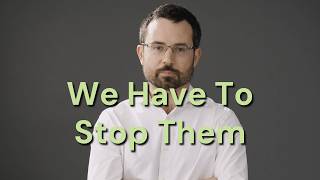
Palisade Research, a nonprofit that studies the capabilities and motivations of AI agents, launched frominside.ai on Sept 29, 2026. The site describes itself as “a collection of interviews with current or former employees of frontier AI companies, in which those employees express their personal views about AI development.” Its tagline: “The headlines say AI could kill us. Ask the people building it.” Twelve full interviews went up on Palisade’s YouTube channel that day, along with a four-minute highlights reel and a teaser. Eli Tyre led the project and conducted the interviews; some subjects were filmed in London by a local crew, with Tyre interviewing over Zoom.
The site arranges quotes under questions such as “Do they really believe AI could kill everyone?” and “If they believe this, why do they work on it?”. Examples, quoted from the site:
- Geoffrey Irving (ex-OpenAI, ex-Google DeepMind): “The chance of human extinction is about a coin flip, in my view, about a half.” Also: “They wouldn’t be saying, ‘My product might kill everyone,’ if they didn’t actually believe that.”
- Neel Nanda (Google DeepMind): “I would put at least a ten percent chance that it causes human extinction, and that is ridiculously high.” And: “If I did not believe that my work was directly reducing these existential risks, I would quit.” He also says: “I think that from a cynical perspective, pacing the frontier is just what Sam Altman wants.”
- Mary Phuong (Google DeepMind): “I think you absolutely should be suspicious of what I’m saying because I am being paid by the lab.” And: “It’s not as simple as let’s all leave the labs, and then things will be fine.”
- Juan Felipe Cerón Uribe (OpenAI): “Is it plausible that humanity will go extinct? And I think it’s turning out to be really hard to rule out.”
- Daniel Kokotajlo (ex-OpenAI): “This is exactly as dangerous as it sounds and must not be allowed to happen.”
- Alex Turner (ex-Google DeepMind): “I left Google because they broke their commitments on AI safety.”
- Jeffrey Ladish (ex-Anthropic, now Palisade’s executive director): “I left Anthropic because it seemed like we needed actual government oversight of AI development.”
- Rosie Campbell (ex-OpenAI): “It felt like people were treating this like just any other tech product.”
- Andreas Kirsch (Google DeepMind at the time of the interview): “The best moment for people to make use of their agency, whether that is speaking out, pivoting to AI safety research, or walking away, that moment is now.”
- Jeremy Schlatter (ex-OpenAI, now a Palisade research engineer): “Some of them think that their work could directly lead to everyone dying, but if they don’t do it, someone even sloppier will do it.”
Palisade’s framing and caveats. The FAQ says the project was prompted by “the massive response to Jacob Coxon’s and Evan Hubinger’s tweets”, and states Palisade’s own position: “We at Palisade generally agree with Jacob Coxon that the AI companies are ‘gambling with our lives.’” That is the organisation’s view, not a finding. The FAQ also says the subjects “are not a representative sample”: they were recruited through Palisade’s networks and were “disproportionately employees on safety teams, people who are more concerned about the risk, and people who are more enthusiastic about pacing the frontier”. It points readers to AI Impacts’ researcher survey for a representative view. Interviews were unscripted. Subjects got the questions in advance, could decline any of them, and could do several takes; Palisade edited “for flow and clarity”. Palisade says it filmed 22 interviews, and many will be released only if the person later gives permission. It is asking for more interviews, especially from capabilities researchers and from employees who are skeptical about the risks. Two of the twelve, Ladish and Schlatter, work at Palisade. The site was built by Lightcone Infrastructure, with Claude Opus 5.5 credited for design and development.
Coverage. The Verge covered the launch the same day (“AI researchers put out videos saying superintelligence is ‘exactly as dangerous as it sounds’”), leading with Irving’s and Nanda’s estimates. Aggregators and AI-news sites republished it. We found no on-record response from OpenAI, Google DeepMind or Anthropic. Palisade has also posted short clips from the interviews, several a day between Oct 10 and Oct 15.
Why it matters
It is the largest on-camera collection so far of named current frontier-lab employees giving personal extinction-risk estimates. It followed Jacob Coxon’s resignation and the “Pacing the Frontier” debate. The interviewees disagree on numbers (from “at least a ten percent chance” to “about a coin flip”) and on whether to stay at the labs. By the organiser’s own account, the sample is selected for concern.
Sources
8 sources from 5 sites. Numbers match the chips in the text.
8 sources: 3 primary, 1 press, 4 reactions
Primary
- frominside.ai (Palisade Research)frominside.ai, official
- Palisade Research on X: launch post (Sept 29)x.com, official
- frominside.ai: questions sent to interviewees in advance (Google Doc)docs.google.com, docs
Press
- The Verge: AI researchers put out videos saying superintelligence is ‘exactly as dangerous as it sounds’theverge.com, press
Reactions
- YouTube: What 12 AI Insiders Want You to Know — in 4 Minutesyoutube.com, video
- YouTube: Mary Phuong (Google DeepMind) full interviewyoutube.com, video
- YouTube: Geoffrey Irving full interviewyoutube.com, video
- YouTube: Neel Nanda (Google DeepMind) full interviewyoutube.com, video
Changes
- Filed (Palisade’s two Turner and Krakovna uploads were already in the dataset since 2026-09-30)