722 Math Papers in One Night. One of Them Is About Riemann.
Adem B10YouTube18,320 views as of 10 October 2026
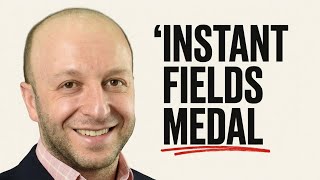
Why it is here
Explainer on the OpenAI math release focused on the zeta-strip zero-free region (‘not the Riemann Hypothesis’); ~18k views.
Description
Description written by Gemini from the videoGemini 3.8 Flash, 10 October 2026
Summary
This video is an analytical explainer presented by Adem B10 discussing OpenAI’s mass release of 722 AI-authored mathematics manuscripts across 372 result families uploaded to GitHub on October 6, 2026. The host examines the computational setup, the role of formal Lean theorem verification, and tests three specific results—the resolution of an Erdős conjecture with a $5,000 bounty, a Lean-formalized proof of the quasi-Riemann hypothesis establishing a zero-free strip up to 7/8, and the hundreds of unformalized papers—to separate substantiated breakthroughs from hype and human co-authorship.
What is shown
- [00:03] GitHub repository interface (
Anonymous/math) showing preprints, Lean code, and overview files. - [00:11] Social media post by Rutgers mathematician Alex Kontorovich reacting to the claimed Quasi-Riemann Hypothesis proof.
- [00:37] Three-item scorecard overview: (1) Erdős $5,000 problem, (2) Zeta 7/8 zero-free region, and (3) The remaining ~700 papers.
- [00:51] Graphical breakdown of the evaluation pipeline: ~4,000 open math problems evaluated, averaging 3 hours of test-time compute per result, yielding 372 problem families and 722 papers.
- [01:14] Breakdown of Lean formal proof verification: showing roughly two-thirds of the 372 families have computer-checked Lean proofs.
- [01:40] Visual explanation of arithmetic progressions in subsets of integers and the Erdős reciprocal sum conjecture ($5,000 prize), along with OpenAI’s paper Quasipolynomial Bounds for Arithmetic Progressions dated September 23, 2026 [02:20].
- [02:34] Diagram of the Riemann zeta function critical strip ($0 \le \text{Re}(s) \le 1$), the critical line at $1/2$, and OpenAI’s proved boundary line showing no zeros when $\text{Re}(s) > 7/8$ [03:15].
- [03:53] Excerpt from OpenAI’s repository README acknowledging that unformalized results in the collection may contain errors.
- [04:22] Excerpts from the September 29 advisory group statement hosted at the Institute for Advanced Study and their October 6 follow-up statement.
Claims & numbers
- OpenAI compute and methodology: The presenter states an unreleased proprietary OpenAI model was given ~4,000 open mathematical problems, spent an average of 3 hours of compute per result, and generated 722 papers across 372 problem families (the presenter notes).
- Lean verification proportion: The presenter claims approximately two-thirds of the 372 result families include formal proofs verified line-by-line using the Lean theorem prover.
- Erdős conjecture prize: The presenter claims Paul Erdős originally offered $3,000 and later raised the bounty to $5,000 for proving that any set of integers whose reciprocals diverge contains arbitrarily long arithmetic progressions; prior to 2020, mathematicians had only proven the length-3 case.
- Quasi-Riemann hypothesis: The presenter states that for 130 years since 1896, mathematicians were unable to establish a uniform vertical zero-free strip for the Riemann zeta function, and OpenAI’s paper proved $\zeta(s) \neq 0$ for $\text{Re}(s) > 7/8$, verified in Lean.
- Human assistance on Quasi-RH: The presenter notes OpenAI disclosed that the Quasi-RH result did not originate from the autonomous 3-hour runs alone, but was an exception where a human edited the write-up.
- Unverified proportion: The presenter states roughly one-third of the families lack Lean proofs and have not been peer-reviewed or independently vetted.
Notable quotes
- [00:16] “Quasi-RH?!?!?!?! Are you kidding me? If a human did this, it would be an instant Fields Medal, no questions asked.” — Alex Kontorovich (read by presenter)
- [05:11] “the most significant moment in mathematical history” — Levent Alpöge (read by presenter)
- [05:21] “All mathematicians should take a brief holiday to recover.” — Thomas Bloom (read by presenter)
Assessment
This is an independent analysis and review video featuring animated motion graphics and sourced quotes rather than an official demo. The presenter accurately contextualizes the verified Lean proofs versus unformalized drafts, highlighting both the genuine breakthrough in formal verification and the caveats regarding human involvement and unvetted papers.
Described by gemini-3.8-flash on 2026-10-10 from the video’s audio and frames.