Claude Solved a 27-Year NSA Mystery in Half an Hour
Adem B10 YouTube 57,132 views as of 19 October 2026
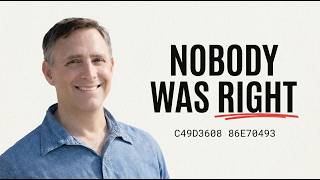
Why it is here
Explainer (~57k views in a day) of Anthropic’s report that an internal Claude model found, in under half an hour, that the NSA’s 1997 seeds for P-256 and its sibling curves came from the C library’s lrand48 generator seeded by a clock (P-256’s run began 01:52:34 UTC on 16 Aug 1997), not from a hashed sentence. First video on the story above a few hundred views.
Description
Description written by Gemini from the videoGemini 3.8 Flash, 19 October 2026
Summary
This video, created and narrated by Adem B10, recounts how Anthropic’s Claude solved the 27-year-old mystery behind the origin of NIST’s standard elliptic curve seeds (including P-256). Through minimalist whiteboard-style 2D line animations, archival video clips, and timeline graphics, the presenter explains how the AI deduced that the cryptographic seeds were generated using the standard Unix PRNG lrand48 seeded by a 1997 system timestamp rather than from an English sentence hash.
What is shown
- [00:00 - 00:35] Digital clock animation displaying
01:52:34on 16 August 1997, illustrating how a computer fed a timestamp into a PRNG and generated candidate 1,842 (c49d3608...), which became the parameter for elliptic curve P-256. - [00:35 - 01:17] Timeline and background of suspicions that the NSA planted a backdoor, including the explanation from NSA mathematician Jerry Solinas and Anthropic’s report that Claude solved the puzzle in under 30 minutes.
- [01:17 - 02:38] Explanations of digital signatures, seed hashing, and clips of cryptographer Daniel J. Bernstein and mathematician Edward Frenkel explaining elliptic curves and the Dual_EC_DRBG backdoor revealed by Edward Snowden in 2013.
- [02:39 - 03:54] Chronology of efforts to find the seed: Alfred Menezes receiving the seeds in 1997, Bernstein emailing Jerry Solinas in 2014, failed sentence-guessing brute-force attempts, Steve Weis filing FOIA requests in 2018, and Filippo Valsorda launching a $12,288 bounty in 2023.
- [03:55 - 05:37] Explanation of Claude’s method: writing a scanner across 34 generators, detecting a stuck leading 0-bit characteristic of the C standard library function
lrand48, using the 1982 LLL (Lenstra–Lenstra–Lovász) lattice reduction algorithm to reconstruct missing bits for P-256, and Claude’s internal reflection note (“Wow, it’s a real discovery”). - [05:38 - 07:05] Reconstruction of the exact Unix timestamp (
871,696,354seconds) corresponding to 16 August 1997 at 01:52:34 UTC, the chronological ordering of the NIST curves (P-192, P-256, P-521, P-384, P-224, and binary curves), and Steve Weis’s reaction. - [07:06 - 08:53] Analysis of whether a backdoor was planted: calculating that the NSA had roughly $2^{30}$ degrees of freedom (far short of the estimated $2^{70}$ required by Bernstein and Lange’s method), note on unsolved anomalies (skipped candidate #876 and curve B-163), and the $36,864 tripled bounty donated to Let’s Encrypt.
Claims & numbers
- The presenter says Claude solved the mystery in under 30 minutes without being given the human hypothesis that the seed was a hashed phrase.
- The presenter states Filippo Valsorda offered a bounty of $12,288 in 2023, which was tripled to $36,864 when donated to the nonprofit certificate authority Let’s Encrypt.
- The presenter states that in 4 of 10 analyzed NIST curve seeds from that era, every 32-bit block starts with a 0 bit, an event with odds of 1 in 5,810 by random chance, identifying the signature of the Unix C library function
lrand48. - For curves retaining 31 of 48 bits, the presenter says Claude had to guess 17 missing bits ($2^{17} = 131,072$ options); for P-256, which only exposed 8 bits per 48-bit step, Claude used the 1982 LLL lattice reduction algorithm to recover the state.
- The presenter says the starting timestamp for P-256 was
871,696,354seconds since the Unix epoch, pinpointing 16 August 1997 at 01:52:34 UTC at candidate 1,842. - The presenter states the NSA had approximately 30 bits of search freedom ($2^{30} \approx 10^9$ possibilities) across the 1997–1998 period, roughly 1 trillion times less than the $\sim 2^{70}$ bits needed to plant a weak curve via the Bernstein–Lange method.
- The presenter notes that candidate 876 for P-256 was also a valid curve but was skipped, and that the binary curve B-163 remains unexplained by the
lrand48generator.
Notable quotes
- [00:50] “This week, Anthropic says Claude worked it out in under half an hour. There was no sentence. It was a clock.”
- [05:34] “In its own notes, Claude wrote: ‘Wow, it’s a real discovery.’”
- [08:18] “Everyone had been working from one clue: a man’s memory. And the memory was wrong.”
Assessment
This is an independent educational review and explanatory summary of the research paper published by Anthropic’s Frontier Red Team on October 16, 2026. The video relies on animated visualizations and public footage rather than live screen captures of Claude’s runtime, clearly communicating factual technical findings verified by external cryptographers.
Described by gemini-3.8-flash on 2026-10-19 from the video’s audio and frames.