OpenAI’s Verified Navier-Stokes Proof Isn’t the One in the Paper
Adem B10YouTube32,217 views as of 12 October 2026
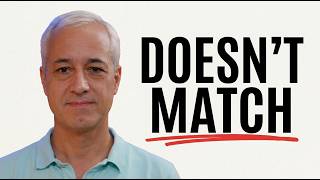
Why it is here
Nine-minute explainer of the ‘lost in translation’ critique (King’s College London and Cambridge authors) of OpenAI’s Lean-checked Navier–Stokes proof.
Description
Description written by Gemini from the videoGemini 3.8 Flash, 12 October 2026
Summary
In this video, creator Adem B10 investigates a critical discrepancy in OpenAI’s computer-verified Navier–Stokes blow-up proof, following an analysis paper by mathematicians Alexander Bastounis, Fabian Circelli, and Anders C. Hansen. He explains how automated AI translation into the Lean theorem prover can produce a valid machine check for an altered proof rather than the original natural-language manuscript, and explores why verifying translation faithfulness is fundamentally undecidable.
What is shown
- [00:00] Overview of OpenAI’s September 5 Navier–Stokes blow-up claim generated by 10,000 AI agents and verified via Lean.
- [00:30] Pedro Domingos’s X post from October 8, 2026, linking to the arXiv preprint “Navier-Stokes lost in translation: Why Lean verification of AI autoformalisation does not guarantee correct natural language proofs.”
- [02:23] Walkthrough of an introductory toy error: an invalid factorization of $p(x) = x^3 - x^2 - x + 1$ as $(x-1)(x+1)^2$, which GPT-6 Astra silently corrected to $(x-1)^2(x+1)$ when autoformalising to Lean [03:01].
- [03:34] Comparison of Lemma 8.6 in OpenAI’s paper (requiring 4 additional derivatives) versus the Lean formalization
norm_derivativeWord_inverse_le(which requires 5 additional derivatives) [03:55]. - [04:36] Discrepancy highlighted in equation (10.19) regarding bounds on pressure between the natural language manuscript and the Lean code.
- [05:35] Discussion of theoretical limits on automated translation verification, citing Alan Turing’s halting problem (1936) and Hilbert’s 10th problem (1970).
- [06:58] Mention of OpenAI pulling three papers from its 722-paper release due to audit-detected sign errors in unverified manuscripts.
- [07:16] Screenshot of a comment on Terence Tao’s blog arguing the paper’s headline is “a bit misleading” because the differences lie in intermediate steps rather than the overarching theorem formulation.
- [07:47] Checklist of three questions to evaluate whenever a paper claims to be “verified by computer.”
Claims & numbers
- The presenter states that inside OpenAI, about 10,000 AI agents worked on Navier–Stokes for days before claiming a proof on September 5 [00:02].
- Pedro Domingos’s post on X received over 200,000 views [00:29].
- The authors of the critical paper are Bastounis, Circelli, and Hansen from Cambridge and King’s College London [00:54].
- The presenter claims 42% of the results in OpenAI’s major mathematics release rely on Lean verification [01:04].
- In Lemma 8.6, the paper claims 4 additional derivatives are required ($m + 4$), whereas Lean checks require 5 ($m + 5$) [03:48].
- The presenter notes that OpenAI recently pulled 3 manuscripts out of its 722-paper mathematics release due to sign errors discovered during internal audits [06:45, 06:58].
Notable quotes
- “Surprise: the verified Navier-Stokes proof doesn’t match the one in the paper.” — Pedro Domingos (quoting the post) [00:30]
- “When we say verified, what we really know is that the French is perfect. Not that it says what you wrote.” — Adem B10 [02:07]
- “A yes from the computer can never, on its own, prove the translation was faithful. Somebody still has to read both.” — Adem B10 [06:33]
Assessment
This is an analytical explainer and review of a recent arXiv paper critiquing autoformalisation in OpenAI’s mathematical proofs. The visuals are clean hand-drawn animations and authenticated document screenshots illustrating technical points directly discussed by the presenter.
Described by gemini-3.8-flash on 2026-10-12 from the video’s audio and frames.