Honnō-ji Incident explained in 60 seconds: video by Opus 5.5, voice by Gemini 3.8 TTS (X video, Japanese)
AI+ (エーアイプラス) (@AIPlus_AISchool) · 2026-09-24 · ai-made · 373,856 views
Views: X 229k · X 144k (silent first version (Opus 5.5 only), one shot per the creator)
Made by AI
Model: Claude Opus 5.5, Gemini 3.8 TTS · Series: Code-rendered film (LLM writes the program that draws every frame)
Evidence: X post (2026-09-24): 'Gemini 3.8 TTS 凄くないですか? / 声優の仕事なくなるかもしれないですね... / YouTube動画もAIだけで運用できる時代になりましたね / 動画:Opus 5.5 / 音声:Gemini 3.8 TTS'
Human role: Creator asked Opus 5.5 to explain the 1582 Honnō-ji Incident (one shot for the silent first version), then added a Gemini 3.8 TTS voice-over.
Pipeline: Opus 5.5 → map animation (video) + Gemini 3.8 TTS narration
What's in the video
Description written by Gemini, which watched and listened to the whole video.
Summary
This video is a 60-second educational short produced by AI+ (@AIPlus_AISchool) explaining the 1582 Honnō-ji Incident in Japanese history. It is the first installment of their "60-Second Picture Scroll: Japanese History" series, with the video composition reportedly directed/scripted by Claude Opus 5.5 and narrated using Gemini 3.8 TTS.
What is shown
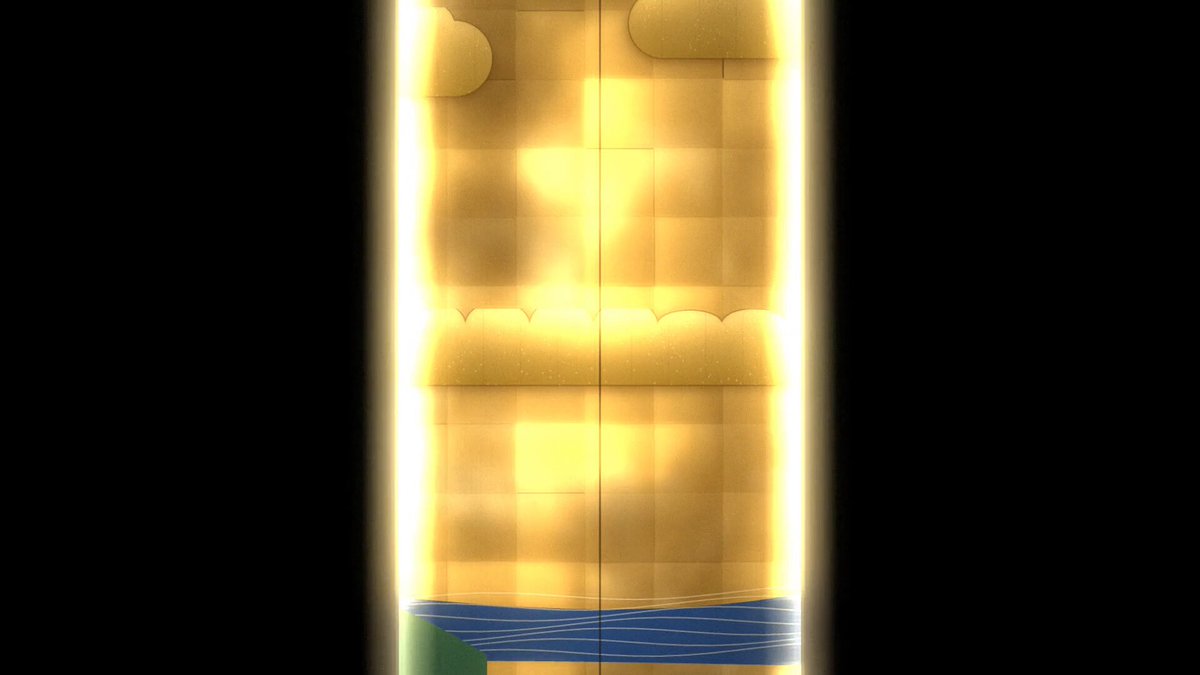
- [00:00 - 00:03]: Traditional Japanese gold-leaf folding screen (byōbu) opening animation introducing the series title: "60-Second Picture Scroll: Japanese History - Volume 1: Honnō-ji Incident" (60秒絵巻 日本史 第一巻 本能寺の変).
- [00:04 - 00:07]: Title card marking the date and place: June 2, 1582 (Tenshō 10), Kyoto.
- [00:08 - 00:12]: Timeline scrubbing 22 years from the Battle of Okehazama (1560) through Nobunaga's march on Kyoto (1568), Nagashino (1575), and the destruction of the Takeda clan (1582).
- [00:13 - 00:23]: Motion map of Japan displaying the strategic disposition: Hashiba Hideyoshi confronting the Mōri in Chūgoku, Nobunaga lodged at Honnō-ji with few guards, and Akechi Mitsuhide departing Tanba-Kameyama Castle under orders to march west.
- [00:24 - 00:30]: Silhouette depiction of Mitsuhide’s army marching east toward Kyoto beneath bellflower (kikyō) banners, surrounding Honnō-ji at dawn.
- [00:31 - 00:37]: Nobunaga in silhouette uttering his famous words before Honnō-ji is engulfed in flames; on-screen text notes his body was never recovered.
- [00:38 - 00:45]: Map depicting the "Chūgoku Ōgaeshi" (Hideyoshi's rapid forced march back to Kyoto) and the Battle of Yamazaki on June 13.
- [00:46 - 00:51]: Kinetic typography displaying "三日天下" (Three-day reign), crossed out and corrected to "約11日" (approximately 11 days).
- [00:52 - 00:59]: Silhouette face-off between Nobunaga and Mitsuhide highlighting the unresolved mystery behind the coup.
Claims & numbers
- The incident occurred on June 2, 1582 (Tenshō 10) in Kyoto, 22 years after the 1560 Battle of Okehazama [00:04, 00:08].
- Nobunaga eliminated the Takeda clan in March 1582 and was at the peak of his power [00:11].
- Mitsuhide's troops departed Tanba-Kameyama Castle on the night of June 1 [00:21].
- Hideyoshi defeated Mitsuhide at the Battle of Yamazaki on June 13, 1582 [00:42].
- The narrator notes that while Mitsuhide's brief rule became known as "三日天下" (mikka tenka, three-day reign), it actually lasted approximately 11 days between Honnō-ji and Yamazaki [00:48].
- The narrator states the true motive behind Mitsuhide's betrayal remains an unsolved mystery with numerous competing theories [00:55].
Notable quotes
- "是非に及ばず" ("It cannot be helped" / "There is no use disputing it") [00:31]
- "三日天下。実際は、本能寺の変から山崎の戦いまで約11日だった。" ("A three-day reign. In reality, it was about 11 days from the Honnō-ji Incident to the Battle of Yamazaki.") [00:46]
- "なぜ光秀は、主君・信長を討ったのか。その理由は、いまも諸説あり謎のままだ。" ("Why did Mitsuhide strike down his lord Nobunaga? The motive remains a mystery with various theories even today.") [00:52]
Assessment
This is a finished, high-quality educational short demonstrating AI-assisted rapid content creation, combining AI voice generation (Gemini 3.8 TTS) and AI scripting/production workflow (Claude Opus 5.5). The video displays clean motion graphic design, accurate historical sequencing, and fluent Japanese narration without technical glitches.
Lyrics & themes
The video contains spoken Japanese narration focusing on the historical narrative of the Honnō-ji Incident:
- Prologue & Rise: Nobunaga reaching his zenith in 1582, 22 years after Okehazama ("1560年の桶狭間から、22年。信長は勢いの頂点にいた。" [00:08]).
- The March: Strategic divergence where Mitsuhide was ordered west to aid Hideyoshi but redirected toward Kyoto ("しかし向かったのは、西ではなく京都だった。" [00:22]).
- The Coup: The attack at dawn and the burning of the temple ("寺は炎に包まれ、信長は自害したとされる。" [00:34]).
- Aftermath & Mythbusting: Hideyoshi's return and correcting the idiom "three-day reign" to 11 days ("光秀の天下は、のちに「三日天下」と呼ばれる。実際は、本能寺の変から山崎の戦いまで約11日だった。" [00:46]).
Lore & references
- Sengoku Era History: Focuses on Oda Nobunaga, Akechi Mitsuhide, and Hashiba Hideyoshi (Toyotomi Hideyoshi).
- Shinchō Kōki: Quotes Nobunaga's documented reaction, "Zehi ni oyobazu" (是非に及ばず), attributed to Ōta Gyūichi's chronicle.
- Folklore vs. Historiography: A footnote at [00:25] points out that Mitsuhide's famous phrase "Teki wa Honnō-ji ni ari" ("The enemy is at Honnō-ji") was a dramatization popularized in later eras; also debunks the literal meaning of mikka tenka (three-day reign).
- Heraldry: Accurately incorporates the Oda mokkō crest (five-lobed quince) and the Akechi kikyō crest (bellflower).
Visual style & craft
The video uses a flat vector cutout and shadow-puppet aesthetic reminiscent of traditional Japanese screen paintings (byōbu-e), utilizing gold textures, stylized cloud banners, silhouette characters, and animated illuminated route lines on topographical maps. The execution indicates structured 2D motion graphics compositing combined with AI-generated narration.
Described by gemini-3.8-flash on 2026-10-05 from the video's audio and frames.