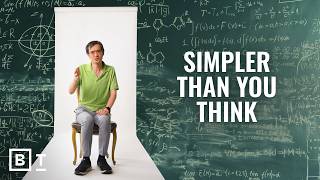
One of the world’s greatest mathematicians explains 6 essential concepts of math | Terence Tao
Big Think YouTube 2,816,285 views as of 18 October 2026
Why it is here
Big Think’s 85-minute interview with Terence Tao (Aug 28, ~2.8M views), listed in his Oct 17 post ‘Some of my recent talks and interviews’. Mostly about mathematics in general, but its third chapter (from 54:55, about 30 minutes) is on how AI is changing maths: autonomous results such as OpenAI’s Erdős unit distance disproof, Lean verification, “proof indigestion” and First Proof. Missed for seven weeks.
Description
Description written by Gemini from the videoGemini 3.8 Flash, 18 October 2026
Summary
In this in-depth interview with Big Think, mathematician Terence Tao explores the six core pillars of mathematics—numbers, algebra, geometry, probability, analysis, and dynamics—and examines how curiosity-driven mathematical theory historically preempts major scientific breakthroughs. He then analyzes the accelerating role of artificial intelligence in contemporary mathematics, detailing how machine learning and automated theorem provers are reshaping problem-solving, proof verification, and human research practices.
What is shown
- 00:00 – Introduction: Terence Tao introduces himself and his book Six Math Essentials, outlining the structure of the discussion.
- 00:48 – Chapter 1: The 6 Essential Elements of Mathematics:
- 01:39 – Numbers: Examination of prehistoric tally bones (Dolní Věstonice, Ishango) [01:44], tracing the expansion of counting numbers into negative, rational, irrational, and complex numbers [05:00].
- 06:21 – Algebra: Abstraction beyond concrete quantities, properties like commutativity [07:11], matrix algebra [08:42], and Johannes Kepler’s calculation of wine barrel volumes [10:15].
- 12:04 – Geometry: Measurement of terrestrial and celestial distances, triangle similarity [12:45], and Ptolemaic astronomy [13:35].
- 15:55 – Probability: Managing uncertainty from gambling roots [15:10], universality laws, and the Gaussian bell curve [17:06].
- 17:24 – Analysis: The mathematics of error bars [17:35], limits, dealing with infinity, and the infinite monkey theorem [20:54].
- 24:32 – Dynamics: The math of change over time, traffic flow and compression waves [25:25], stable vs. unstable equilibria [27:06], and the transition from Kepler’s two-body problem to the chaotic three-body problem [29:35].
- 32:37 – Chapter 2: How Math Solves the Problems of Science:
- The cycle of curiosity-driven basic research and Eugene Wigner’s “unreasonable effectiveness of mathematics” [34:20].
- Euclid’s parallel postulate [35:03], the discovery of non-Euclidean spherical and hyperbolic geometry [36:34], and Riemannian geometry powering Einstein’s general relativity [38:00].
- Kepler’s sphere packing conjecture [39:28], hexagonal close packing, computer-assisted proofs, and high-dimensional sphere packing in digital wireless telecom [41:14].
- Compressed sensing [42:26]: how total variation minimization reduced MRI scan times from minutes to seconds [44:40], with cross-disciplinary applications in seismology and sensor networks.
- Embracing failure in research and Niels Bohr’s definition of an expert [41:18].
- 54:55 – Chapter 3: How AI is Changing Math and Science Forever:
- Paradigms of science: theory, experiment, simulation, big data, and machine learning [55:00].
- Explaining large language models as high-dimensional regression and curve fitting [59:50].
- Autonomous mathematical breakthroughs, showing OpenAI’s resolution of Erdős’s 1946 planar unit distance problem [76:20].
- Benchmarking research capabilities with the First Proof challenge [78:09].
- The lifecycle of modern proofs: automated generation, formal verification (Lean), and “proof indigestion” [82:33], alongside the risks of overfitting and loss of human pedagogical pipelines.
Claims & numbers
- Number systems & history: Paleolithic tally marks on animal bones predated formal alphabetic writing systems and were independently invented across multiple civilizations.
- Kepler conjecture: Kepler conjectured that hexagonal close packing achieves maximum spatial efficiency (~74% density); this remained unproven for centuries until Thomas Hales published a computer-assisted proof in 1998, which was formally verified in a proof assistant in 2014.
- Compressed sensing: Tao explains that traditional MRI machines required patients to stay still for several minutes to collect dense Fourier data; compressed sensing algorithms allowed high-resolution reconstructions from sparse data, drastically shortening scan times.
- First Proof challenge: Tao cites the First Proof benchmark of 10 unpublished research-level mathematical problems, noting leading AI systems successfully solved roughly 5 to 6 of them.
- Erdős planar unit distance problem: Tao highlights that an AI model autonomously disproved Paul Erdős’s 80-year-old conjecture (originally posed in 1946) regarding unit distances.
- Proof indigestion: Tao states that while AI can accelerate proof generation and automated verification, human comprehension, curation, and textbook synthesis remain a bottleneck that cannot be trivially accelerated.
Notable quotes
- 20:29 — “Infinity is a very dangerous beast if you’re not trained to deal with it properly.”
- 41:18 — “An expert is a person who has made all of the mistakes that can be made in a very narrow field.” (quoting Niels Bohr)
- 82:33 — “We’re now experiencing what you might call ‘proof indigestion,’ where suddenly there’s lots and lots of pending solutions to problems...”
Assessment
This is an authentic, professionally produced long-form interview by Big Think featuring Fields Medalist Terence Tao. Tao provides conceptual explanations, historical analogies, and academic commentary accompanied by graphic overlays, diagrams, and historical prints; no live coding or active mathematical calculations are performed on screen.
Described by gemini-3.8-flash on 2026-10-18 from the video’s audio and frames.
Related
More videos on this
-
ICM 2026 Public Lectures - Terence Tao
Simons Foundation223,220 views as of 12 Oct
-
Terence Tao: “Mathematics in the Age of AI” (ICM 2026)
Alvaro Lozano-Robledo41,658 views as of 9 Oct
-
Terence Tao - The integrated explicit analytic number theory network - IPAM at UCLA
Institute for Pure & Applied Mathematics (IPAM)13,979 views as of 18 Oct