Did AI Really Solve Navier–Stokes? Show Me The Proof!
citytutoringmathYouTube62,037 views as of 12 October 2026
Why it is here
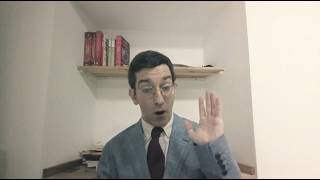
54-minute sceptical walk-through of what OpenAI actually announced and what remained unproved at the time.
Description
Description written by Gemini from the videoGemini 3.8 Flash, 12 October 2026
Summary
In this video, Alfred Cromwell, founder and president of City Tutoring, delivers a commentary on OpenAI’s recent announcement claiming that its AI system solved the Navier–Stokes existence and smoothness Millennium Prize problem. Speaking directly to the camera from his study, Cromwell addresses the public hype, the ongoing priority dispute, and the distinction between formal verification and true mathematical understanding.
What is shown
- [00:00] Alfred Cromwell introduces himself as founder and president of City Tutoring and states the topic: OpenAI’s recent Navier–Stokes claim.
- [04:41] Cromwell discusses OpenAI’s announcement involving an internal multi-agent AI system, a large analytical manuscript, and a formalization in Lean.
- [12:38] Cromwell addresses the Lean formalization and acknowledges that formal verification is valuable, but warns against confusing symbolic verification with human understanding.
- [21:04] Cromwell reviews the priority dispute involving Diego Córdoba, Luis Martínez-Zoroa, Tristan Buckmaster, and Lievvon Al-Boushi (Levon Nurbekyan / Vlad Vicol context), discussing attribution between human research and corporate AI agents.
- [32:35] Cromwell discusses mathematical pedagogy and why students must continue learning rigorous proofs despite AI tools.
- [51:14] Cromwell concludes by outlining the necessary review process before the proof can be accepted and reiterates the demand to inspect the mathematical argument directly (“Show me the proof!”).
Claims & numbers
- The presenter says OpenAI announced that one of its internal AI systems produced a purported solution to the Navier–Stokes existence and smoothness problem [04:41].
- The presenter says the system involved approximately 10,000 artificial agents working in concert over many hours and exchanging millions of messages [05:14].
- The presenter notes that OpenAI released an analytical manuscript accompanied by a formalization in Lean [05:01].
- The presenter says the manuscript was released just two days prior to recording [08:34].
- The presenter states that a priority and attribution controversy exists surrounding earlier human research by Diego Córdoba, Luis Martínez-Zoroa, Tristan Buckmaster, and collaborators [21:20].
Notable quotes
- [11:10] “Does the argument follow? Let me say it again: does the argument follow?”
- [28:13] “My conception of human dignity does not depend upon the machine remaining stupid.”
- [51:19] “Show me! Show me!”
Assessment
This is a commentary and opinion video presented by an educator reacting to an industry announcement; no direct technical demo, code execution, or software interface is shown on screen. All statements regarding OpenAI’s model performance, cluster scale, and proof contents are oral summaries and critiques by the presenter rather than independent verifications.
Described by gemini-3.8-flash on 2026-10-12 from the video’s audio and frames.