Pros Try Fake AI Photoshop
Linus Tech Tips YouTube 2,635,399 views as of 15 October 2026
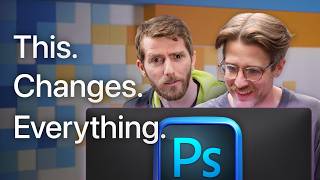
Why it is here
Linus Tech Tips (11:20) has professionals try a free AI-made Photoshop clone, framed by the wave of AI clones and decompiled games (‘Is it piracy? Is it a step towards an AI-assisted open source future?’). The description does not name the clone; the link to ArtCraft’s PhotoCraft is our inference. 2.6M views.
Description
Description written by Gemini from the videoGemini 3.8 Flash, 15 October 2026
Summary
In this video from Linus Tech Tips, host Linus Sebastian investigates the viral phenomenon of AI-reconstructed software, specifically focusing on Photon Studio (an AI-generated clone of Adobe Photoshop created by Tanzen Studio). Linus explains the technical and legal distinctions between binary decompilation and AI-assisted “functional reconstruction,” while Linus Media Group creatives and editors test Photon Studio against real Adobe Photoshop in common production tasks.
What is shown
- [00:06] Linus highlights viral social media posts announcing a feature-complete AI clone of Photoshop (Photon Studio) and open-source suites like ArtCraft (PhotoCraft, VectorCraft, FilmCraft, etc.), as well as AI-assisted game mashups (skateboarding in Call of Duty: Modern Warfare 2 and extraction shooting in Skyrim).
- [01:31] Linus shows the Tanzen Studio website for Photon Studio, noting it abruptly switched from a $70 purchase model to a free download.
- [01:50] Staff members Robert Oakes, Brad Bennett, Reece Murray, Riley Murdock, Ashley Wong, and Victor Zheng begin side-by-side blind/comparative testing of Photoshop versus Photon Studio (“I Can’t Believe It’s Not Photoshop”).
- [02:18] Robert tests image loading, noting Photon Studio is noticeably slower to import images and open files compared to Photoshop.
- [02:32] Reece tests opening and developing camera RAW files; one file fails to open entirely in Photon Studio, though basic slider adjustments work on another.
- [03:00] Linus details binary decompilation versus AI-powered “functional reconstruction,” drawing historical comparisons to Phoenix Technologies’ 1980s clean-room reverse engineering of the IBM PC BIOS.
- [03:25] Ashley and Victor test basic graphic design tasks (face replacement, text placement, color gradients, layer manipulation), encountering visual layer glitches and odd behavior.
- [05:03] Riley and Robert test “Select Subject” and object selection tools; Photon Studio struggles with edges (such as cutting off parts of a pirate hat or selecting background pixels under layers).
- [07:23] Reece and Peter test exposure and shadow recovery on high-contrast RAW images; Photon Studio fails to recover dynamic range from deep shadows compared to Camera Raw in Photoshop.
- [07:55] Brad tests the color mixer and manual adjustments, experiencing render preview lag, UI freezes, and an infinite loop/window duplication bug [08:06].
- [08:12] Riley tests transform tools, noting severe display latency where the selection outline moves but the canvas image lags seconds behind.
- [08:44] Staff give their verdict: while Photon replicates Photoshop’s UI and core shortcuts surprisingly well, sluggish performance, missing depth in RAW handling, and severe bugs make it unusable for professional workflows without significant development.
Claims & numbers
- The presenter notes viral claims described Photon as a feature-complete $70 one-time purchase clone working across Windows, macOS, and Linux, which switched to being completely free within hours of filming.
- Linus claims traditional decompilation has historically been extremely labor-intensive (citing the 2019 fan decompilation of Super Mario 64), but generative AI allows automated functional recreation from prompts and behavior modeling.
- The video references Phoenix Technologies’ historic clean-room reverse engineering of IBM PC BIOS manuals, noting US legal precedents protect functional reverse-engineering when original code is not directly copied.
Notable quotes
- [01:37] “Wait, it’s free now? As of filming? That changed in the last three hours?” — Linus Sebastian
- [04:44] “It’s probably closer to ‘functional reconstruction’, where the new AI-generated source is intended to reproduce the same behavior as the original software, but has completely different bytes...” — Linus Sebastian
- [08:35] “As like someone who would be doing this professionally, having to wait this long for every tweak... game over.” — Brad Bennett
Assessment
This is a hands-on review and technical analysis of an AI-reconstructed software clone (Photon Studio) by creative professionals. The testing is conducted live in a production environment, candidly showing both functional successes (accurate UI layout, basic tool functionality) and genuine flaws (extreme latency, RAW decoding limitations, and rendering glitches).
Described by gemini-3.8-flash on 2026-10-15 from the video’s audio and frames.