Sam Altman: RSI, AI Consciousness, OpenAI’s New Hardware, Compute, and more!
Matthew Berman YouTube 184,859 views as of 22 October 2026
Why it is here
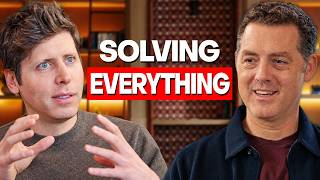
Sam Altman interviewed by Matthew Berman (45 min), Oct 21, 2026, about 185k views in a day. Chapters: when AI will discover new treatments (0:52), why AI hasn’t killed coding jobs (3:31), personal AI assistants (11:47), “Why the AI Consciousness Debate Worries Sam” (20:10), “ChatGPT Is Too Agreeable” (26:09), OpenAI’s bet on chips and cheaper compute (30:03), “Why AI Needs a New Kind of Computer” (34:20) and recursive self-improvement. A first-hand interview with OpenAI’s CEO during a busy week for the company.
Description
Description written by Gemini from the videoGemini 3.8 Flash, 22 October 2026
Summary
In an in-depth interview, host Matthew Berman speaks with OpenAI CEO Sam Altman about recent milestones and future directions in artificial intelligence. Altman addresses the application of frontier models to mathematics and scientific discovery, the progression of personal ambient AI assistants like dots, compute scaling and custom hardware, the philosophical and practical hazards of debating AI consciousness, and why AI development should aim for a “new Renaissance” centered on human agency rather than another Industrial Revolution.
What is shown
- [00:00–00:46] Teaser reel highlighting key discussion points (AI consciousness, refusing user prompts, form factors, recursive self-improvement, timeline for curing diseases, and Renaissance vs. Industrial Revolution).
- [00:49–04:45] Discussion on frontier AI models producing novel mathematical proofs and scientific discoveries; Altman draws parallels to how coding expanded software demand rather than eliminating programmers.
- [07:05–10:55] Berman explains his video editing workflow using AI tools (such as Aster/Astra); Altman discusses how delegating tasks changes craft and reveals he has not read or reviewed a line of code in about a year [10:18].
- [11:48–14:06] Analysis of personal ambient AI assistants (such as dots and OpenClaw); Altman describes his personal experience with an assistant monitoring tasks, reasoning across disparate context, and saving roughly an hour daily.
- [14:07–17:10] Conversation on compute scaling, GPU demands, efficiency gains per watt, and avoiding the trap of hyper-competition that leaves humans overworked.
- [17:11–20:09] Altman outlines his concept of a “new Renaissance” rather than an “Industrial Revolution” trap where workers become cogs serving machines.
- [20:10–26:08] Detailed discussion on model consciousness; Altman explains why he does not believe current models are conscious, rejects granting models personhood, and warns against psychological manipulation when models simulate consciousness.
- [26:09–30:03] Addressing model personality, sycophancy, and the Model Spec; Altman shares his own custom instructions instructing models to eliminate fluff and push back directly when having high conviction.
- [30:04–34:19] Examination of long-term compute infrastructure, specialized chips, robotics in data center operations, and traditional competitive moats.
- [34:20–37:41] Discussion on platform risk, relationship with Apple, and why dedicated consumer AI hardware with new form factors is needed beyond smartphones and PCs.
- [37:42–40:34] Reflection on Paul Graham describing Altman as “extremely formidable,” learning resilience, and Silicon Valley’s culture of embracing failure.
- [40:35–45:07] Managing executive pressure and closing advice encouraging optimism for an empowering, human-centric future.
Claims & numbers
- Disease cures/treatments: Altman expects AI-discovered drug or treatment candidates for a major disease to enter testing pipelines within the next “couple of years” [02:27].
- Altman’s personal coding: Altman stated he has not written, read, or looked at a line of code in probably a year [10:20].
- Personal assistant impact: Altman estimates using his AI assistant (dots) saves him about an hour a day of unwanted tasks and flags urgent issues multiple times daily [13:23].
- Compute and efficiency: Altman argues that fixed compute projections underestimate the compounding effect of models becoming significantly cheaper and more efficient per task over time [15:00].
- AI model personhood: Altman states OpenAI does not ascribe personhood to its models and strongly opposes framing that suggests models have rights or that human agency should be subordinated to AI systems [22:18, 23:34].
Notable quotes
- [10:19] “I have not read or even looked at a line of code in probably a year.” — Sam Altman
- [17:55] “We should be shooting more for a new Renaissance than a new Industrial Revolution... The future has to be about people.” — Sam Altman
- [22:25] “We build the future for people, and AI is a resource for people, and people need to make the key decisions of the future.” — Sam Altman
Assessment
This is a standard long-form video interview featuring direct, unscripted conversation between Matthew Berman and Sam Altman in a studio setting. No live benchmarks, screen demos, or physical hardware devices are demonstrated on camera; the discussion consists entirely of dialogue, personal reflections, and forward-looking commentary.
Described by gemini-3.8-flash on 2026-10-22 from the video’s audio and frames.