The controversy around OpenAI “solving” a $1m math problem (Navier-Stokes)
Physics by OimeowYouTube2,613,114 views as of 12 October 2026
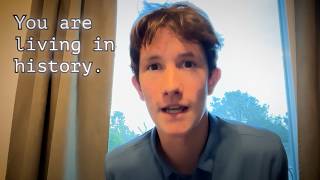
Why it is here
The most-viewed YouTube video found on the OpenAI Navier–Stokes claim (~2.6M views): a summary of the claim and the copying controversy as known on 2026-09-08. Missed by earlier runs.
Description
Description written by Gemini from the videoGemini 3.8 Flash, 12 October 2026
Summary
In this video, creator Oimeow breaks down the September 8, 2026 controversy surrounding OpenAI’s claimed proof of finite-time blowup for the forced 3D Navier–Stokes equations. He details the timeline of competing papers by academic researchers affiliated with NYU and Anthropic, priority and authorship disputes involving OpenAI’s math lead Sébastien Bubeck, OpenAI’s multi-agent Lean verification, and an active technical objection raised by Princeton mathematician Stan Palasek.
What is shown
- [00:07] Calendar graphic and announcement details of OpenAI’s claim on September 8, 2026, referencing an internal model compared against GPT-6 Astra.
- [00:18] Diagrams illustrating fluid turbulence, vortex stretching, and singularity formation in the Navier–Stokes equations.
- [00:36] Screenshot of Tristan Buckmaster’s public statement regarding interactions with OpenAI and Levent Alpöge’s authorship credit.
- [00:45] Screenshot of Stan Palasek’s technical objection posted to Mathstodon addressed to Terence Tao.
- [01:08] Clay Mathematics Institute list of the 7 Millennium Prize Problems.
- [02:27] Wikipedia entries and simulations of the Boussinesq approximation and 3D incompressible Euler equations.
- [02:51] Explanation of the Lean Interactive Theorem Prover and formal verification systems.
- [03:55] Excerpt from Terence Tao’s blog post discussing finite-time blowup with smooth forcing.
- [04:31] Social media statement by Sébastien Bubeck denying allegations of attempting to exclude Alpöge.
- [04:35] OpenAI post announcing a Navier–Stokes blowup proof generated across 88 hours by ~10,000 agents.
- [04:55] GitHub repository showing Lean formalization code accompanying OpenAI’s Navier–Stokes manuscript.
- [05:43] Paper excerpts and social media exchange between Stan Palasek and Terence Tao discussing dyadic models and energy depletion.
- [07:17] Brief vlogging cutaways of the presenter editing late into the night before summarizing key takeaways.
Claims & numbers
- The presenter states that on September 8, 2026, OpenAI announced a model stronger than GPT-6 Astra had proven finite-time blowup for forced Navier–Stokes equations, an unsolved problem for over 90 years (00:06).
- The presenter notes that on August 15, 2026, Tristan Buckmaster (NYU) and Levent Alpöge (Anthropic) completed proofs for related fluid systems (Boussinesq and 3D incompressible Euler), formally verified in Lean on August 22, 2026 (02:17).
- The presenter claims Sébastien Bubeck contacted Buckmaster on September 6, 2026, describing a ~100-page internal OpenAI model proof (03:20).
- OpenAI’s announced Navier–Stokes proof was reportedly produced by an unreleased model coordinating roughly 10,000 AI agents in parallel over 88 hours, yielding a 166-page manuscript and Lean verification repository (04:35).
- The presenter notes Stan Palasek raised an objection arguing energy depletion caused by viscosity overcomes instability growth before a singularity can form (05:28).
- The presenter notes the Clay Mathematics Institute requires solutions to be published in qualifying peer-reviewed journals and stand uncontested for two years before awarding the $1 million Millennium Prize (06:10).
Notable quotes
- [00:06] “On September 8th, 2026, which is today, OpenAI announced that one of its models, which is claimed to be better than GPT-6 Astra, had proven a problem that mathematicians have been stuck on for over 90 years.”
- [05:16] “Formal verification only checks if the mathematical logic within a framework is internally consistent. It doesn’t check whether the framework... was set up correctly in the first place.”
- [08:03] “You are living in history.”
Assessment
This is an independent commentary and science journalism video analyzing public statements, social media exchanges, and preprints surrounding an AI mathematics dispute. The presenter relies entirely on third-party documentation, blog posts, and paper snippets, clearly differentiating between verified timeline facts and unverified mathematical claims.
Described by gemini-3.8-flash on 2026-10-12 from the video’s audio and frames.