Maven: the AI system helping the US bomb Iran
The TelegraphYouTube12,183 views as of 12 October 2026
Why it is here
Pre-cutoff background (backfill): the Telegraph’s 37-minute podcast on the Maven decision-support system in the Iran war (April 2026).
Description
Description written by Gemini from the videoGemini 3.8 Flash, 12 October 2026
Summary
This episode of The Telegraph’s podcast series Iran: The Latest, hosted by Venetia Rainey, examines the integration of artificial intelligence into modern warfare and targeting systems. The discussion features filmmaker Adam Wishart (director of Channel 4’s documentary Click to Kill: The AI War Machine) and AI safety researcher Heidy Khlaaf (Chief AI Scientist at the AI Now Institute), who evaluate the deployment of systems like Project Maven, Anthropic’s Claude, and Israeli targeting tools like Lavender in conflicts across Iran, Gaza, and Ukraine.
What is shown
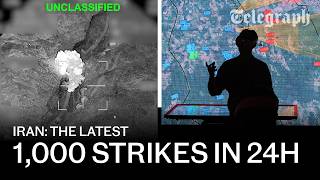
The video is an audio podcast presented with static graphic slides showing audio waveform visualizations, title cards for “Iran: The Latest”, and QR codes to subscribe to The Telegraph.
- [00:14] News and archival audio clips introducing US military operations in Iran and discussions on targeting.
- [00:46] Host Venetia Rainey introduces the topic: the dispute between Anthropic and the Pentagon, and the role of AI in modern targeting.
- [03:22] Heidy Khlaaf outlines decision-support systems and Palantir’s Maven Smart System powered by Anthropic’s Claude model.
- [05:35] Adam Wishart describes how computer vision and LLMs ingest multimodal intelligence (satellite imagery, signals intelligence, telecoms) to locate military assets.
- [08:14] Discussion of AI target accuracy rates and the risk of automation bias in rapid military decision-making.
- [19:19] Adam Wishart discusses the background of Project Maven’s origin at Google in 2016 and the IDF’s deployment of AI systems such as Lavender and “The Gospel” (The Target Factory) in Gaza.
- [33:30] Discussion of autonomous FPV drones operating in electronic warfare environments in Ukraine and human-in-the-loop accountability.
Claims & numbers
- Palantir’s Maven system, powered by Anthropic’s Claude AI model, was used for target recommendation and contributed to 1,000 strikes in the first 24 hours and 5,000 targets within the first 10 days of the conflict (Khlaaf, [03:32]).
- Studies and investigations evaluating AI decision-support targeting systems indicate an accuracy rate between 25% and 50%, with Maven showing 30% or less accuracy in an investigation conducted two years prior (Khlaaf, [08:16]).
- Israeli AI systems generated 15,000 targets within the first three weeks of the Gaza campaign (Wishart, [24:35]).
- The IDF reportedly hit 12,000 targets within one month and 40,000 targets within a year (Rainey, [26:00]).
- Official casualty tolls in Gaza cited by the host include 70,000 killed, with approximately 20,000 being children (Rainey, [26:13]).
- Whistleblower accounts reported collateral damage allowances permitting up to 20 innocent civilians for low-level targets and up to 300 civilians for high-level commanders (Wishart, [25:00], [25:09]).
- Autonomous drone strike zones in Ukraine extend across a contested electronic-warfare zone roughly 30 km deep (Wishart, [33:35]).
Notable quotes
- “It’s not a substitute for human decision-making given how inaccurate they have been for targeting, and I also think it’s very dangerous that speed is somehow being sold to us as being strategic here.” — Heidy Khlaaf [08:32]
- “People talk about humans being in the loop, but it seems to me that humans may be in the loop, but they may be the empty vessels while the computers do the thinking.” — Adam Wishart [33:06]
- “All wars bring technological innovation, and those people who can adapt it and use it faster are the ones who survive.” — Adam Wishart (quoting a Ukrainian drone pilot) [36:13]
Assessment
This is an investigative podcast interview and analytical discussion produced by The Telegraph. It contains no direct real-time software captures or physical product demonstrations, relying instead on reported accounts, journalistic interviews, and expert analysis regarding military AI deployments.
Described by gemini-3.8-flash on 2026-10-12 from the video’s audio and frames.