AI Over Reliance, Stale Intel Behind US Strike On Iran School | WION News
WIONYouTube5,258 views as of 12 October 2026
Why it is here
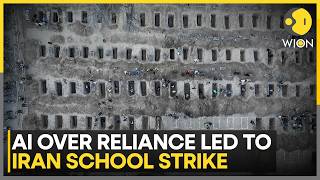
WION report on Bloomberg’s account of the Pentagon review: flawed intelligence, outdated imagery and overreliance on AI-assisted targeting.
Description
Description written by Gemini from the videoGemini 3.8 Flash, 12 October 2026
Summary
A WION news anchor reports on findings from an internal investigation—first reported by Bloomberg—revealing that a February 28, 2026 U.S. missile strike on a school in Minab, Iran was caused by intelligence failures, outdated imagery, and an overreliance on artificial intelligence. The broadcast outlines how military personnel leaned heavily on Palantir’s Maven system during an intense 24-hour bombardment campaign, and summarizes Palantir’s defense and subsequent tool updates.
What is shown
- [00:00] Studio anchor introducing the report on the U.S. strike in Minab, Iran, and concerns over AI overreliance.
- [00:22] Field footage from Minab (dated February 28, 2026) showing rescue workers, rubble, excavators, and an ambulance transporting victims.
- [00:36] Inside shots of the destroyed elementary school classrooms, showing debris-covered desks, drawings, and collapsed ceilings.
- [00:50] Archival military footage showing naval warships launching Tomahawk cruise missiles and land-based surface-to-air/missile systems firing.
- [01:06] Crowds and wreckage outside the impacted compound in Minab.
- [01:27] Palantir Technologies branding, logo graphics, and office exteriors alongside AI visualization graphics.
Claims & numbers
- Two Tomahawk missiles hit the Shajaraye Tayyebeh elementary school in Minab, Iran on February 28, 2026 (the presenter says, citing Bloomberg reporting on an internal investigation).
- The missile strike killed more than 150 people (the presenter says, while an on-screen lower third also cites 123 killed in an earlier count).
- The strike occurred during the start of the war after the Donald Trump administration ordered a large-scale assault that hit more than 1,000 targets within the first 24 hours, leaving military personnel little time to assess or approve them (the presenter says).
- CENTCOM personnel reportedly relied heavily on Palantir’s Maven system to target the site, which had previously been part of a military compound before being walled off to operate openly as a school (the presenter says).
- Palantir stated it was not responsible for underlying data or for identifying intelligence gaps (the presenter says).
- Following the incident, Palantir reportedly developed new review tools intended to flag inconsistencies or data that could rule out a target (the presenter says).
Notable quotes
- [00:10] “A U.S. strike on a school in the Iranian city of Minab was reportedly the result of a chain of intelligence failures, outdated imagery, and an overreliance on AI.”
- [01:35] “They expected the system to flag outdated or conflicting intelligence, however, those checks did not prevent the school from being designated as a target.”
- [01:45] “In its defense, Palantir has said that it is not responsible for the underlying data or for identifying intelligence gaps.”
Assessment
This is a standard broadcast news segment reporting on investigative reporting from Bloomberg and Pentagon review disclosures rather than a technical demonstration. All imagery consists of newsroom presentation, disaster footage, corporate logo graphics, and stock b-roll of missile launches.
Described by gemini-3.8-flash on 2026-10-12 from the video’s audio and frames.