I’m using Jev more than Opus 5.5 or GPT-6. Here’s why.
How I AI YouTube 55,985 views as of 27 October 2026

Why it is here
Found 2026-09-29 by YouTube search “opus 5.5 vs gpt-6” (sorted by upload date). Listed as: 33,300 views, length 26:25, published “1d ago” (so the date above is approximate).
Description
Description written by Gemini from the videoGemini 3.8 Flash, 29 September 2026
Summary
Claire Vo, host of How I AI, introduces and demonstrates Jev, a fast, low-cost “System 1” decision model developed by TypeSafe AI. She contrasts its structured, type-safe output paradigm with standard generative LLMs and demonstrates how she integrates Jev into multi-model workflows, local developer data analysis, product intelligence, and real-time interactive apps.
What is shown
- [01:42] Sponsor segment: Overview of OpenArt Arena, showcasing creative model rankings across video and image generation tasks.
- [02:50] Architecture & documentation walk-through: TypeSafe AI documentation comparing standard LLMs with System 1 models, detailing Jev’s primitives:
Choice[05:42],Score[06:16], andNoul(calibrated probability/Boolean) [06:38]. - [07:48] GitHub PR analysis in Codex: Using Jev for pairwise comparisons and Gemini 3.5 Flash-Lite for theme labeling across pull requests:
- First run: 112 PRs (6,216 pairwise comparisons) clustered into 39 groups across 6 themes for $0.011 [07:48].
- Second run: 1,745 PRs (approx. 17,000 pairwise evaluations) analyzed in under two minutes for $0.09 [09:28].
- [11:20] Local session log analytics: Meta-analysis running across local Claude Code and Codex session logs from January to September 2026, plotting shifts in engineering versus agent-directed work [11:37].
- [15:16] ChatPRD architecture overview: Multi-model pipeline diagram pairing Jev for high-throughput classification and clustering with Astra and Sol/Luna for deeper reasoning and text synthesis.
- [19:10] Comment Lab dashboard & live search: Analysis of 4,483 audience comments, categorized into sentiment tones, 58 episode ideas, and 465 quality praise tags [20:11], followed by live search filtering queries like “comments about screenshare” [21:20] and “slop” [21:29].
- [22:52] Real-time voice-to-quote app: A live browser application pairing OpenAI’s Realtime voice API with Jev to detect emotional sentiment, dynamically change background hex colors, and query matching quotes as Vo speaks [23:20–24:10].
Claims & numbers
- Vo states that models released in the preceding five days include Opus 5.5, GPT-6 Sol, and GPT-6 Luna [00:14].
- Jev is described as an unstructured-text-input, type-safe output decision model with response latencies between 70 ms and 500 ms [02:50].
- Vo notes that Jev costs $0.042 per million input tokens (or $42 per billion tokens), while output tokens are free because outputs are structured classifications rather than generated strings [02:50, 04:12].
- Vo claims running Jev on 1,745 PRs with roughly 17,000 pairwise comparisons cost 9 cents and completed in approximately two minutes [09:40].
- Vo notes her local developer activity shifted from nearly 100% manual product engineering in January 2026 to under 40% in September 2026, with agentic and tooling workflows expanding [12:04].
- Vo states her ChatPRD product intelligence pipeline ingested 1,100 raw signals, ran over 200,000 classifications and pairwise groupings via Jev, and cost approximately $4 in Jev compute [17:42].
Notable quotes
- [03:20]: “With Jev, you are getting text in, type-safe values out.”
- [04:12]: “It is four cents per million input tokens. It is like dirt freaking cheap.”
- [13:26]: “Jev alone is okay. Jev with an LLM buddy is super powerful.”
Assessment
A hands-on technical review and practical demonstration by a creator/founder. The showcased workflows in Codex, ChatPRD, and custom web applications reflect working developer implementations, with live performance, cost breakdowns, and API response latencies shown directly on screen.
Described by gemini-3.8-flash on 2026-09-29 from the video’s audio and frames.
Related
More videos on this
-

“Gave Opus 5.5 donald’s prompt, Midjourney, and a moodboard. 12 hours later, woke up to this”
anabology (@anabology)20,389,459 views as of 15 Nov
-
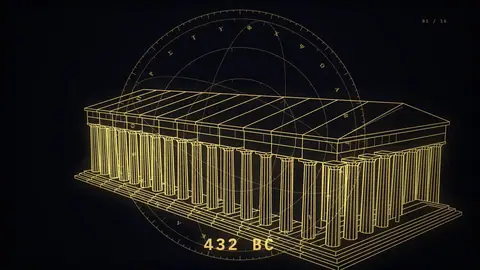
Western civilization in 2 minutes 16 seconds
vittorio (@IterIntellectus)“i asked claude to make a video on western civiization”15,294,523 views as of 22 Nov
-

“The Clodyssey”
anabology (@anabology)Claude, another 12 hours12,576,393 views as of 27 Oct
-
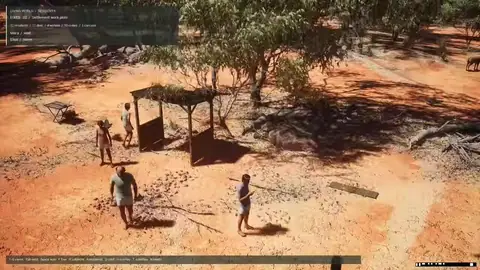
GPT-6 Astra builds an Unreal Engine world of Astra-powered people who start talking to each other
Matt Shumer (@mattshumer_)11,808,885 views as of 8 Nov