AI history timeline from Turing to reasoning models, ‘made entirely with code’ by Opus 5.5
BridgeMind (@bridgemindai) X 141,914 views as of 22 November 2026

Why it is here
Listed in the claudevideo.org community catalog; ~138k views on X by 2026-10-09. Length 1:00.
Description
Description written by Gemini from the videoGemini 3.8 Flash, 10 October 2026
Summary
This video is a programmatic motion graphic timeline charting key milestones in artificial intelligence history from 1943 to 2026, culminating in modern reasoning models and agent systems. Published by BridgeMind (@bridgemindai), the production is an AI-generated piece where the design, procedural animations, visual transitions, and electronic soundtrack were reportedly generated entirely via code by Claude Opus 5.5.
What is shown
- [00:00–00:03]: Opening quote typing animation on a black screen: “Can machines think? — Alan Turing, 1950”.
- [00:04–00:13] Early Foundations: Blueprint-style vector animations showcasing McCulloch & Pitts modeling artificial neurons (1943), Turing’s Imitation Game (1950), the Dartmouth workshop naming “artificial intelligence” (1956), Rosenblatt’s Perceptron linear classifier (1958), and Weizenbaum’s ELIZA chatbot running on punchcards/printer paper (1966).
- [00:14–00:17] First AI Winter: Minsky & Papert’s Perceptrons critique (1969), leading into a dark, snowy aesthetic representing the First AI Winter and the Lighthill Report (1973).
- [00:18–00:21] Expert Systems & Second AI Winter: Amber CRT terminal visualization showing the Expert Systems Boom (1980), Rumelhart, Hinton, and Williams introducing Backpropagation with multi-layer neural network diagrams (1986), shifting into snowflake graphics for the Second AI Winter (1988).
- [00:22–00:29] Digital Age Milestones: Neon green vector chess board depicting IBM’s Deep Blue defeating Garry Kasparov (1997), Yann LeCun’s LeNet digit recognition (1998), ImageNet image grid (2009), and IBM Watson winning Jeopardy! (2011).
- [00:30–00:37] Deep Learning Revolution: AlexNet ImageNet classification win (2012), generative adversarial networks (GANs) generating a retro sun/grid landscape (2014), and AlphaGo defeating Lee Sedol with a spotlight on “Move 37” on a Go board (2016).
- [00:38–00:45] Transformers & LLMs: Visual arch illustration for “Attention Is All You Need” (2017), horizontal token representation for BERT & GPT (2018), GPT-3 spiral galaxy visualization (2020), and AlphaFold 2 folding protein backbone ribbons (2020).
- [00:46–00:51] Generative Era & Reasoning: ChatGPT burst animation (2022), text-to-image noise diffusion for DALL-E 2 and Stable Diffusion (2022), frontier model curves for GPT-4, Claude, and Llama (2023), and branching tree-of-thought search diagrams for reasoning models alongside 2024 Nobel Prize announcements (Hopfield & Hinton in Physics; Hassabis, Jumper, & Baker in Chemistry).
- [00:52–00:56] Autonomous Agents & Climax: UI mockup of AI agents writing code, reasoning, and acting on computers (2025–2026), ending with the prompt “Can machines think?” and the typed system response: “Let me think.” (2026).
- [00:57–01:00]: Credits title card: “Can Machines Think? 1943–2026 — Design, animation, music & sound: written entirely in code.”
Claims & numbers
- AlexNet [00:30]: Top-5 error of 15.3% vs. runner-up of 26.2% on ImageNet (2012).
- AlphaGo [00:34]: Defeated Lee Sedol 4–1 in 2016 (highlighting “Move 37”).
- GPT-3 [00:42]: Stated at 175 billion parameters (2020).
- Nobel Prizes [00:50]: Notes the 2024 Nobel Prize in Physics awarded to Hopfield & Hinton and Chemistry to Hassabis, Jumper & Baker.
- Production claim [00:57]: On-screen credits assert that the animation, design, music, and sound design were written entirely in code.
Notable quotes
- [00:02]: “Can machines think? — Alan Turing, 1950”
- [00:35]: “Move 37”
- [00:56]: “Can machines think? Let me think.”
Assessment
This is a creative, AI-coded historical retrospective and art showcase rather than a product benchmark demo. All historic dates, papers, and figures faithfully reflect established computer science milestones, rendered seamlessly in procedural code-based animation without deceptive marketing claims.
Lyrics & themes
- Format: Strictly instrumental; there are no vocal lyrics or voiceovers.
- Musical Theme: The procedural score shifts stylistically across epochs, starting with minimalist, vintage monophonic tones, transitioning through dark ambient drone pads during AI winters, retro synthwave basslines during the 1980s–1990s, and resolving into an energetic modern electronic breakbeat/synth soundscape as it enters the transformer and generative AI eras.
Lore & references
- Move 37: References AlphaGo’s famous, creative move against Lee Sedol in Match 2 of their 2016 Go series.
- AI Winters: Displayed with literal snowfall and freezing visual effects, referencing periods of reduced funding and interest following the Lighthill Report (1973) and late-1980s expert systems collapse.
- “Let me think.” [00:56]: A play on Turing’s fundamental 1950 question, referencing modern reasoning models that output visible “thinking” tokens and chain-of-thought scratchpads before answering.
Visual style & craft
- Format: Code-rendered 2D vector and canvas motion graphics (Canvas/WebGL/SVG style) executed entirely through script without conventional 3D CGI or pre-rendered stock footage.
- Aesthetic: Dynamic era-specific art directions: parchment/blueprint drafting paper for early cybernetics (1940s–1960s), cold navy particle fields for AI winters, amber cathode-ray CRT terminal typography for the 1980s, green wireframe grids for the 1990s, and high-contrast dark-mode glowing nodes, attention arches, and diffusion noise animations for the modern deep learning era.
Described by gemini-3.8-flash on 2026-10-10 from the video’s audio and frames.
How AI was used to make it
AI made all of it of this video: visuals from ai-written code, music.
- LLM wrote code that procedurally rendered every frame of motion graphics
- LLM generated procedural electronic music and sound design in code
Tools named: Claude Opus 5.5
Classified by gemini-3.8-flash from our description of the video (high confidence), 25 October 2026. How AI is used to make videos, across the whole log
Made by AI
- Made with
- Claude Opus 5.5
- How we know
- X post (2026-09-25): ‘Claude Opus 5.5 made this video entirely with code.’
- Human role
- Creator states Opus 5.5 made it entirely with code.
- Pipeline
- Opus 5.5 → code-rendered film → 60-second clip
- Series
- Code-rendered film (LLM writes the program that draws every frame)
Related
More videos on this
-

“Gave Opus 5.5 donald’s prompt, Midjourney, and a moodboard. 12 hours later, woke up to this”
anabology (@anabology)20,389,459 views as of 15 Nov
-
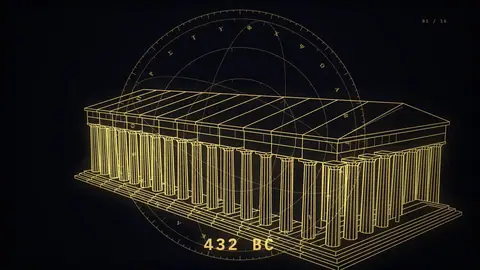
Western civilization in 2 minutes 16 seconds
vittorio (@IterIntellectus)“i asked claude to make a video on western civiization”15,294,523 views as of 22 Nov
-
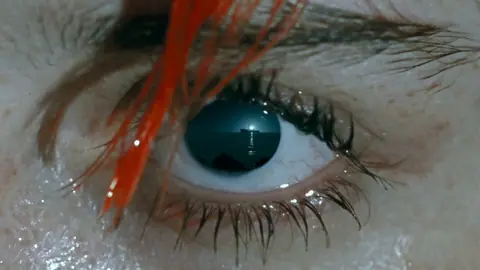
“The Clodyssey”
anabology (@anabology)Claude, another 12 hours12,576,393 views as of 27 Oct
-
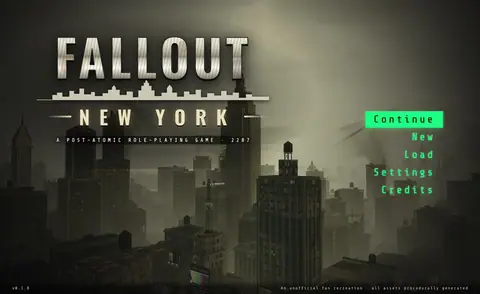
Fallout: New York, a full browser Fallout game built with Opus 5.5, zero asset files
CHRIS FIRST (@chrisfirst)3,649,272 views as of 26 Oct