GPT-6 Astra is Crazy For AI Video
Dan Kieft YouTube 364,285 views as of 15 November 2026
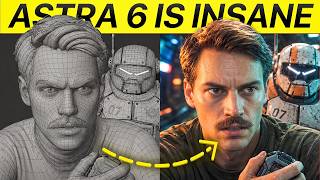
Why it is here
Dan Kieft on using GPT-6 Astra with Blender and Higgsfield MCPs for AI filmmaking. ~325k views by 2026-10-09. Length 20:18.
Description
Description written by Gemini from the videoGemini 3.8 Flash, 9 October 2026
Summary
Content creator Dan Kieft tests and reviews OpenAI’s GPT-6 Astra across three creative workflows: 3D world-building, post-production, and directing. He demonstrates how connecting Astra via MCP (Model Context Protocol) to external tools like Blender, DaVinci Resolve, and Adobe After Effects enables precise camera blocking, automated editing, and graphic design, while also evaluating whether the model can direct a short film autonomously.
What is shown
- Intro Skit [00:00 - 01:18]: Dan and a companion robot infiltrate an OpenAI subterranean lab to steal “100% complete AGI” before heading back to Dan’s studio.
- 3D World-Building in Blender [01:45 - 03:15]: Demonstrates a 3D bar environment (“Blue Hour Bar”) constructed via Astra-prompted Blender scripts, as well as an Astra-generated interactive browser viewer for walkthroughs and camera placement.
- ChatGPT & MCP Configuration [03:18 - 04:15]: Configures ChatGPT desktop settings with GPT-6 Astra and plugins/MCP servers, including Blender and Higgsfield connectors (with DaVinci and Adobe integrations).
- Generative World & Shot Blocking [04:16 - 07:50]: Astra generates Python code to populate 3D geometry in Blender; Dan places geometric cylinders as actor proxies to guide camera movements and character blocking, feeding them into Seedance 2.5 and GPT Image 2.5 Sunburst to generate photorealistic video scenes.
- Studio & Interior Reconstruction [08:17 - 09:34]: Dan uploads reference photos of his real-world studio and empty apartment; Astra estimates room dimensions and creates 3D desk/lighting layouts in Blender.
- Thumbnail Generation & Ideation [09:35 - 11:56]: Prompts GPT-6 Astra and GPT Image 2.5 Sunburst to produce layered Photoshop (.PSD) thumbnails, testing several conceptual visual treatments.
- AI Post-Production & Video Editing [11:57 - 16:16]:
- Connects Astra to DaVinci Resolve via MCP to automate a 100-image match-cut sequence at 10 cuts per second [12:40].
- Prompts Astra to build an editable, layered After Effects package animating a graphic logo (“Break the Box”) [14:16].
- Demonstrates Astra executing real-time color grading inside DaVinci Resolve [15:18].
- Directing Benchmark (Astra vs. Human) [16:17 - 19:35]: Dan feeds Astra a screenplay, storyboard, and character references to direct a short dialogue scene autonomously, comparing Astra’s generated film [16:50] against his own human-directed edit of the same script [17:50].
Claims & numbers
- Dan asserts that fully autonomous prompts often produce generic results (“ChatGPT garbage”) and emphasizes that users must understand Blender basics (navigation, camera positioning) to achieve quality output [05:23].
- In the match-cut test, Dan instructed Astra to source 100 individual letter images and edit them into DaVinci Resolve at 10 cuts per second [13:02].
- Dan claims that DaVinci Resolve’s MCP connector currently functions more reliably and seamlessly with Astra than Premiere Pro integrations [12:31, 16:01].
- Dan argues that human direction remains visibly superior in pacing, subtext, and continuity compared to end-to-end autonomous model direction [18:54].
Notable quotes
- “In my opinion, this is not the case... you definitely need to learn the basics of this tool to get around, to know how to move your camera angles, to actually understand what the AI is doing.” [05:23]
- “If I may be biased, I think my video is better, although like still not perfect, and cost me a lot more time than Codex did.” [18:54]
- “It is a tool, not a thing that takes over your brain. Because if everyone can make the same type of videos... where’s the fun of it, and where’s the creativity of it?” [19:16]
Assessment
This is a hands-on workflow tutorial and practical review illustrating real MCP tool-use integrations between GPT-6 Astra and creative software suites (Blender, DaVinci Resolve, After Effects). The presenter provides a balanced critique, showing working project files and practical utility while directly debunking exaggerated claims that AI models can replace human creative direction without significant human oversight.
Described by gemini-3.8-flash on 2026-10-09 from the video’s audio and frames.
How AI was used to make it
AI made a substantial part of this video: subject built by ai, generated footage, visuals from ai-written code.
- GPT-6 Astra generated Blender Python scripts to build 3D environments and geometry
- Seedance 2.5 and GPT Image 2.5 Sunburst generated video scenes from 3D camera blocking
- Astra autonomously directed and edited short film scenes and DaVinci Resolve match-cuts via MCP
Tools named: GPT-6 Astra, Seedance 2.5, GPT Image 2.5 Sunburst
Classified by gemini-3.8-flash from our description of the video (high confidence), 25 October 2026. How AI is used to make videos, across the whole log
Related
More videos on this
-
GPT-6 Astra builds an Unreal Engine world of Astra-powered people who start talking to each other
Matt Shumer (@mattshumer_)11,808,885 views as of 8 Nov
-
“Build what you think you look like”: Claude Sonnet 5.5 vs GPT-6 Astra
Siya (@siyabuilt)7,259,229 views as of 27 Oct
-

Did OpenAI actually build AGI? GPT-6 Astra first look
Fireship4,260,544 views as of 8 Nov
-
Introducing GPT-6 Astra: the most intelligent and aligned model in the world.
OpenAI3,769,024 views as of 8 Nov