GPT 6 Astra Makes Minecraft In Different Engines
Minimunch · 2026-09-09 · ai-made · 650,213 views
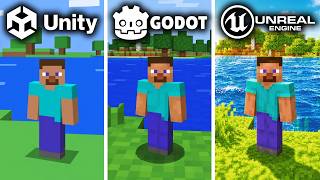
Made by AI
Model: GPT-6 Astra · Series: Agent-built game (video of the result)
Evidence: Description: 'GPT 6 Astra Makes Minecraft 3x - In Unity, Godot, and Unreal Engine 5.'
Human role: Prompted and reviewed each engine build.
Pipeline: GPT-6 Astra → Minecraft-like games in Unity, Godot and Unreal Engine 5
Lore: minecraft-clone
What's in the video
Description written by Gemini, which watched and listened to the whole video.
Summary
Presented by YouTuber Minimunch, this video tests OpenAI’s GPT-6 Astra model connected via Model Context Protocol (MCP) to Higgsfield and Blender to recreate Minecraft from scratch across three different game engines: Unity, Godot, and Unreal Engine. Minimunch tests the generated builds, inspecting generation times, gameplay fidelity, physics, dimensions (Overworld, Nether, End), custom assets, and engine-specific quirks.
What is shown
- [00:00 - 00:27] Setup and Prompting: Introduction to the challenge across Unity, Godot, and Unreal Engine; explanation of Higgsfield MCP for procedural generation of textures, 3D models, sound effects, and UI; entering the master prompt into ChatGPT using GPT-6 Astra.
- [00:28 - 01:29] Unity Build: Inspecting the generated
ClassicVoxelbuild created in 1.5 hours; testing voxel terrain generation, block breaking, mob interaction, and swimming physics. - [01:00 - 01:19] Blender MCP Asset Polish: Updating hand-held item models from flat 2D sprites into 3D voxel meshes created live in Blender via MCP.
- [01:56 - 03:51] Unity Features & Dimensions: Demonstrating admin panel tools (flight, structure spawning, redstone lever demo, TNT blast mechanics), mob spawning, and visiting the Nether and End dimensions.
- [03:52 - 05:51] Godot Engine Clone: Executing the same prompt in Godot; GPT-6 Astra finishes in 59 minutes and 13 seconds, producing 91 3D models; testing custom UI, mob behavior, mining audio, lighting controls, obsidian Nether portal ignition, and dimension transitions.
- [05:52 - 06:27] Unreal Engine Setup: Prompting GPT-6 Astra to build a realistic RTX-style Minecraft clone ("Wildlands") utilizing Higgsfield and Tripo 3D pipelines; process completes in 2 hours and 25 minutes (17 3D models, 19 textures, 6 sound effects).
- [06:28 - 09:28] Unreal Engine ("Wildlands") Gameplay: Showcasing realistic water, textured tools, voxel placement quirks (checkerboard preview bug), boat navigation, realistic mob models (skeletons, pigs, and an eerie skull-like Ghast), cave chambers, Nether lava shaders, and a fully functional airborne Ender Dragon boss fight in the End.
Claims & numbers
- Generation Times:
- Unity build completed in approximately 1 hour and 30 minutes.
- Godot build finished in 59 minutes and 13 seconds (roughly 30 minutes faster than Unity).
- Unreal Engine project took 2 hours and 25 minutes of agent worktime.
- Asset Outputs:
- Godot build generated 91 3D models alongside 16x16 pixel-art texture atlases via Higgsfield.
- Unreal Engine build produced 17 3D meshes (via Tripo), 19 image assets, and 6 sound effects.
- Performance / Target Specs: The presenter prompted for locked 60 FPS performance at full render distance with instant mining/block placement and lighting propagation.
Notable quotes
- [00:36] "So let me get this straight: it made this in an hour and a half? Dude, this looks exactly like Minecraft, there's like no difference."
- [05:47] "Given the fact that this took 30 minutes less than the Unity one, I'd say this is more impressive."
- [08:39] "Oh, well this is the first game to actually include the Ender Dragon. Now that's pretty cool."
Assessment
This is a creator-led hands-on demo and comparative review sponsored by Higgsfield, demonstrating an autonomous agent workflow using GPT-6 Astra and tool-use MCP bridges. While the screen recordings of ChatGPT generation logs, file directories, Blender executions, and in-engine gameplay are genuine, the generation phases are sped up through jump cuts, and gameplay focuses on testing pre-prompted features rather than showing end-to-end debugging or raw code generation.
Lyrics & themes
The video is spoken gameplay commentary and tech demonstration rather than a song. The narration follows an engine-by-engine benchmark narrative:
- Unity section [00:00 - 03:51]: Astonishment at speed and fidelity, troubleshooting flat 2D sprite limitations using Blender MCP.
- "Wait, let me actually equip my sword, I want to see if I can kill these uh pigs." [00:48]
- Godot section [03:52 - 05:51]: Praise for rapid iteration, lightweight architecture, and functional portal logic.
- "Like again, it cooked, bro. This looks amazing." [04:29]
- Unreal Engine section [05:52 - 09:28]: Attempting high-fidelity, realistic voxel aesthetics, identifying placement UI bugs, and discovering a functional Ender Dragon encounter.
- "I think it's so cool that AI can make this now, and this only took 2 hours. I didn't have to do a single thing." [09:23]
Lore & references
- GPT-6 Astra High: OpenAI's frontier reasoning and agentic model released in September 2026, used here to orchestrate long-horizon code and engine project generation.
- Higgsfield MCP & Blender MCP: Dedicated Model Context Protocol server tools allowing LLM agents to call external 3D, image, and audio generation pipelines directly into 3D DCC tools and game engines.
- Tripo 3D: Referenced in the ChatGPT generation summary for procedural 3D item and character model generation.
- Claude / ChatGPT Tabs: Brief glimpses in the browser interface show active chat sessions labeled with joke titles (
poo poopoo pee) and previous projects (e.g., Terraria 1.2, Fortnite, Rocket League clones). - Fiverr Developer Meme: Minimunch references the classic trope: "This is the type of game you would pay a Fiverr developer $500 for, and that's not really a compliment" [06:44].
Visual style & craft
The video is edited in standard modern gaming tech-vlog format, mixing screen captures of chat and terminal interfaces (ChatGPT desktop app, Windows Explorer, Blender viewport) with direct first-person gameplay capture. Assets across the builds contrast sharply: Unity and Godot utilize traditional 16x16 pixel-art voxel shaders and low-poly meshes, while Unreal Engine displays PBR materials, stylized crystal weapons, realistic volumetric lighting, dynamic lava shaders, and complex skeletal meshes for monsters.
Described by gemini-3.8-flash on 2026-09-29 from the video's audio and frames.