How to Actually Influence AI Policy (No Law Degree Required) with Matthew Lipka | Palisade Podcast
Palisade Research YouTube 1,384 views as of 16 October 2026
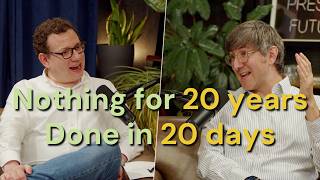
Why it is here
Palisade Research podcast (1 h 24 min) with Matthew Lipka, former head of federal policy at Nuro and White House tech-policy veteran, described as the first person to get an autonomous-vehicle exemption through the US Department of Transportation. Per the description and chapters: how federal rules get made (about nine years on average), why Congress delegates to agencies, courts after Loper Bright, emergency powers, export controls and the Defense Production Act, “AI’s warning shots” (58:04), and how the government moved in 20 days after the Colonial Pipeline attack. Found on 2026-10-16 while checking the Palisade channel: it had never been added.
Description
Description written by Gemini from the videoGemini 3.8 Flash, 16 October 2026
Summary
In this episode of the Palisade Podcast, Dave Kasten (Head of Policy at Palisade Research) interviews Matthew Lipka, Partner at Catalyst-Wayfare and former Head of Policy at Nuro. Lipka breaks down the mechanics of the U.S. administrative state, explaining how federal rulemaking operates under the Administrative Procedure Act (APA), why major rules take years to finalize, and how technical AI practitioners can directly influence regulation without a law degree.
What is shown
- [00:30] Dave Kasten introduces the episode and details Matthew Lipka’s background in autonomous vehicle policy, White House regulatory review, and public-private tech advisory.
- [06:41] On-screen graphic detailing the five core functions of the federal government: spending money, delivering services, collecting and disbursing information, enforcing laws (where regulation resides), and conducting foreign affairs.
- [08:08] Archival document overlay showing the original text of the Administrative Procedure Act of 1946.
- [09:41] Infographic indicating that the average time for a federal agency to complete a rule is approximately 9 years, alongside a graphic showing NHTSA completed only 6 of 22 rules mandated by Congress between 2012 and 2015, with zero met on deadline.
- [10:30] Diagram sequence illustrating “How a Rule Actually Gets Made” through seven stages: Regulatory agenda, Advance notice (optional ANPRM), Draft proposed rule, OIRA review (EO 12866), Public comment (Notice and Comment), Final rule, and Litigation.
- [29:20] Graphic comparing legislative passage rates, showing that only ~2% of bills introduced in the U.S. Congress become law, compared to 74% in Colorado’s state legislature.
- [40:00 – 43:30] Discussion of exceptions to standard notice-and-comment rulemaking, such as foreign affairs exemptions for export controls and emergency “good cause” interim final rules (citing the 2021 Colonial Pipeline cyberattack).
- [46:00 – 50:30] Tactical explanation of how AI engineers and researchers can engage directly with agency staff and OIRA, submit structured public comments, and build tooling to parse regulatory dockets.
Claims & numbers
- The presenter states that the average time for a federal agency to finalize a major regulation is approximately 9 years [09:41].
- Lipka notes that between 2012 and 2015, Congress mandated 22 specific rules for NHTSA in surface transportation reauthorizations; NHTSA completed only 6, missing statutory deadlines on all 6 [09:50].
- Lipka states that Waymo autonomous vehicles have accumulated over 200 million autonomous miles and demonstrate safety rates approximately 10 times safer than human drivers [05:25].
- The graphic notes that only ~2% of bills introduced in Congress become law, contrasted with 74% in Colorado [29:20].
- Lipka states that an OSHA rule regarding silica dust took 19 years from start to final rule [15:00].
- Lipka notes that while the Transportation Security Administration (TSA) had voluntary cybersecurity guidelines for pipelines for 20 years with only six staff members and ~30% adherence by major operators, it issued mandatory emergency directives within 20 days following the Colonial Pipeline ransomware attack [69:20–70:05].
Notable quotes
- [00:13] “You don’t have to go to law school or be a D.C. lawyer in order to influence a regulation.” — Matthew Lipka
- [04:20] “Regulation is just a—an interpretation of a law, right? It’s—it’s just Congress passed a vague law... What does that mean?” — Matthew Lipka
- [55:42] “Being nerdy is a competitive advantage in regulation.” — Matthew Lipka
Assessment
This is an authentic, in-depth policy interview and educational discussion produced by Palisade Research. The video consists of an unedited, continuous studio conversation interspersed with explanatory infographics explaining administrative law and regulatory strategy.
Described by gemini-3.8-flash on 2026-10-16 from the video’s audio and frames.