Mathematicians Are The Canary Down The AI Coal Mine
The Rest Is Science YouTube 199,630 views as of 19 October 2026
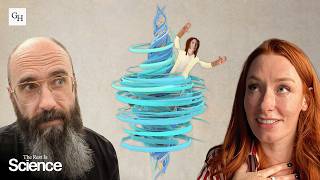
Why it is here
Mathematician Hannah Fry walks Michael Stevens (Vsauce) through the Navier–Stokes equations, OpenAI’s claim that a swarm of agents solved the Millennium problem, and the release of 700+ further manuscripts faster than anyone can check them, and why mathematicians see their vocation turned upside down. ~200k views within a day of upload.
Description
Description written by Gemini from the videoGemini 3.8 Flash, 19 October 2026
Summary
In this episode of The Rest Is Science, mathematicians and science communicators Dr. Hannah Fry and Michael Stevens analyze fluid dynamics, the Navier–Stokes equations, and the brewing controversy around frontier AI labs claiming proofs of open mathematical problems. Fry demonstrates fluid properties and reversible Stokes flow using corn syrup and dye, explains the derivation of Navier–Stokes from Newton’s second law, and details the backlash from mathematicians over OpenAI’s swarm-generated finite-time blow-up proof.
What is shown
- [04:00] Intro update segment discussing OpenAI’s release of over 700 mathematical manuscripts and the ensuing debate.
- [07:38] On-screen graphics breaking down Newton’s second law ($F = m \times a$) applied to fluid parcels.
- [14:50] Display of Cauchy’s momentum equation ($\rho \frac{Du}{Dt} = \nabla \cdot \boldsymbol{\sigma} + \mathbf{f}$) with term-by-term annotations.
- [23:12] Display of the Navier–Stokes equation ($\rho (\frac{\partial \mathbf{u}}{\partial t} + (\mathbf{u} \cdot \nabla)\mathbf{u}) = -\nabla p + \mu \nabla^2 \mathbf{u} + \mathbf{f}$) annotated with acceleration, pressure, viscosity, and external forcing terms.
- [33:15 – 35:22] Practical demonstration of laminar, low-Reynolds-number Stokes flow: Fry uses concentric glasses and viscous corn syrup with green and orange dyes, shearing the dye apart by rotating the inner glass, and then reversing the rotation to return the dye blobs to their original unmixed positions.
- [45:18] Animation illustrating vorticity cascades and finite-time singularity/blow-up behavior in fluid equations.
- [50:50] Presenters query an AI chatbot to demonstrate generative training feedback loops and model disclaimers.
Claims & numbers
- Hannah Fry states that the Clay Mathematics Institute offered a $1 million Millennium Prize in 2000 for proving the existence and smoothness of solutions to the Navier–Stokes equations [00:58].
- Fry states that OpenAI deployed a swarm of approximately 10,000 coordinating AI agents running over 88 hours (~3.5 days), exchanging 2.7 million messages at an estimated compute cost of $15 million, to construct a finite-time blow-up proof for Navier–Stokes [42:25 – 44:55].
- Fry notes that subsequent OpenAI research releases claimed solutions or progress across 722 manuscripts on numerous open mathematical conjectures [04:20, 43:20].
- Fry states that air molecules at sea level are separated on average by distances roughly 10 times their width [08:53].
- Stevens and Fry cite the Ig Nobel Prize-winning fluid dynamics finding that mammals over 3 kg empty their bladders in an average of approximately 21 seconds [39:30 – 39:51].
- Fry reports that independent mathematicians accused OpenAI of utilizing data or prompts derived from human researchers working on similar Euler/Navier–Stokes blow-up constructions within OpenAI-connected coding environments [46:40 – 47:00].
Notable quotes
- [01:15] “It was a swarm of AI agents, and believe me, that has ruffled some feathers.” — Hannah Fry
- [42:42] “Can you prove that the brake always wins out, or are there certain situations in which the feedback effect just goes crazy and the whole thing blows up?” — Hannah Fry
- [58:08] “Mathematicians are the canary in the coal mine here, and I think that actually the entire world is going to have to ask itself some really big, serious questions about purpose...” — Hannah Fry
Assessment
This is an educational science podcast episode and discussion combining theoretical mathematical exposition with an in-studio physical fluid dynamics experiment. The Stokes flow reversibility demonstration is performed live on camera, while the discussion of OpenAI’s AI mathematical proof swarm covers real 2026 mathematical milestones, public claims, and the broader debate on machine-generated proofs lacking human-interpretable insight.
Described by gemini-3.8-flash on 2026-10-19 from the video’s audio and frames.
Related
More videos on this
-

Did AI Solve One of Math’s Hardest Problems?
StarTalk7,740,113 views as of 15 Oct
-

OpenAI’s biggest math breakthrough is getting ugly...
Fireship3,424,687 views as of 9 Oct
-
You Truly Don’t Understand What Just Happened to Mathematics
Prof Gio | Giordano Scarciotti3,242,101 views as of 18 Oct
-
The controversy around OpenAI “solving” a $1m math problem (Navier-Stokes)
Physics by Oimeow2,613,114 views as of 12 Oct