Eight-minute explainer on stochastic differential equations made with Opus 5.5
Tommy(池田俊彦) (@tommy_love123) X 115,397 views as of 22 November 2026

Why it is here
Listed in the claudevideo.org community catalog; ~114k views on X by 2026-10-09. Length 8:01.
Description
Description written by Gemini from the videoGemini 3.8 Flash, 10 October 2026
Summary This video is an eight-minute animated educational explainer breaking down stochastic differential equations (SDEs), Brownian motion, and Itô’s lemma in Japanese. Created by Tommy (@tommy_love123) using Anthropic’s Claude Opus 5.5 to generate the script and animation code, it introduces differential equations with noise and walks through geometric Brownian motion and the Ornstein-Uhlenbeck process.
What is shown
- Ordinary Differential Equations [00:16]: Introduces $dx/dt = \mu x$ with deterministic exponential solutions $x(t) = x_0 e^{\mu t}$, contrasted against real-world jagged paths like stock prices and particle motion.
- Brownian Motion Construction [00:50]: Demonstrates symmetric random walks on discrete coin flips with step sizes $\pm \sqrt{\Delta t}$ as $n \to \infty$, showing path ensembles at time $t$ conforming to normal distribution $\mathcal{N}(0, t)$ with spread envelope $\pm 2\sqrt{t}$.
- Non-differentiability of Brownian Paths [01:43]: Successive zoom-ins ($1\times \to 16\times \to 256\times$) illustrating fractal self-similarity, showing $\Delta W / \Delta t \approx 1/\sqrt{\Delta t} \to \infty$ as $\Delta t \to 0$.
- Formulation & Euler–Maruyama Simulation [02:29]: Introduction of $dX_t = \mu(X_t, t)dt + \sigma(X_t, t)dW_t$ separated into drift ($\mu dt$) and diffusion ($\sigma dW_t$), simulated step-by-step with vector addition (yellow drift arrow + red noise arrow).
- Geometric Brownian Motion & Volatility Drag [03:48]: Simulates 80 trajectories of $dS_t = \mu S_t dt + \sigma S_t dW_t$ ($\mu=0.4, \sigma=0.5$), highlighting the divergence between the arithmetic mean $S_0 e^{\mu t}$ and the lower median path.
- Itô’s Formula and $(dW)^2 = dt$ [04:41]: Demonstrates numerically that $\sum (\Delta W)^2 \to t$ deterministically as partitions refine, proving the necessity of the second-order Taylor term $\frac{1}{2}\sigma^2 f’’(X)dt$ and explaining the median growth rate $\mu - \frac{1}{2}\sigma^2$.
- Ornstein–Uhlenbeck Process [06:37]: Visualizes mean-reverting drift $dX_t = \theta(\mu - X_t)dt + \sigma dW_t$ converging to steady-state Gaussian distribution $\mathcal{N}(\mu, \sigma^2 / (2\theta))$, with practical finance applications noted (Vasicek model, pairs trading).
- Recap [07:18]: Four-point summary screen concluding with “決定論的な流れ × ランダムな揺らぎ” (Deterministic flow $\times$ random fluctuations).
Claims & numbers
- Brownian motion dispersion scales with the square root of time $\sqrt{t}$, with trajectories remaining within $\pm 2\sqrt{t}$ about 95% of the time [01:34].
- Under geometric Brownian motion with parameters $\mu = 0.4$ and $\sigma = 0.5$, median trajectory growth corresponds to $\mu - \frac{1}{2}\sigma^2 = 0.4 - 0.125 = 0.275$ [04:01, 06:14].
- For the Ornstein–Uhlenbeck process, the long-term equilibrium distribution has mean $\mu$ and stationary variance $\sigma^2 / (2\theta)$ [06:58].
Notable quotes
- “微分方程式に、ランダムな揺らぎを足す。それが何を意味するのか、目で見て理解していきましょう。” ([00:07], Adding random fluctuations to differential equations. Let’s visually understand what that means.)
- “ランダムなのに、2乗の和は確定的になのです。” ([05:09], Even though it is random, the sum of squares is deterministic.)
- “確率微分方程式は、決定論的な流れと、ランダムな揺らぎが織りなす動きを記述するための言語なのです。” ([07:41], Stochastic differential equations are the language for describing the dynamics woven together by deterministic flow and random fluctuations.)
Assessment This is a polished, fully executed math education video generated using Claude Opus 5.5 code generation alongside programmatic animation (Manim style) and Japanese neural TTS. All mathematical animations, limits, and stochastic simulations run accurately and cleanly match standard stochastic calculus theory without visual hallucinations.
Lyrics & themes The video is not musical; it features spoken Japanese narration divided into seven structured instructional chapters:
- Introduction [00:00]: “確率微分方程式。名前はいかめしいですが、アイデアはとてもシンプルです。” ([00:00])
- Brownian motion fundamentals [00:50]: Explaining coin-toss limits and the $\sqrt{\Delta t}$ scaling law.
- Itô’s Calculus [04:41]: Demystifying why standard chain rule calculus fails and why $(dW)^2 = dt$ requires the second-order correction term.
- Applications [06:37]: Showing how drift and noise interact in stock modeling and mean-reverting interest rate / pairs-trading dynamics.
Lore & references
- Manim / 3Blue1Brown aesthetic: Utilizes the signature dark slate background, LaTeX typography, pastel line graphs, and coordinate axes popularized by 3Blue1Brown, executed via automated code generation.
- Claude Opus 5.5: Created as an end-to-end demonstration of Claude Opus 5.5’s technical scriptwriting, Japanese narration design, and mathematical animation code generation capabilities.
- Finance lore (Black-Scholes & Vasicek): Directly references foundational quantitative finance models (geometric Brownian motion, Vasicek short-rate model) and trading concepts like volatility drag and pairs trading spread reversion.
Visual style & craft The visuals consist of precise, vector-rendered mathematical graphs, animated coordinate axes, dynamically plotted Brownian motion paths, normal distribution probability density functions, and LaTeX typography rendered on a dark gray backdrop. Synchronized Japanese text captions appear at the bottom alongside clean synthetic Japanese speech narration. The trajectories and convergence plots reflect genuine computational simulation runs rather than generative AI video diffusion frames.
Described by gemini-3.8-flash on 2026-10-10 from the video’s audio and frames.
How AI was used to make it
AI made all of it of this video: script or lyrics, voice, visuals from ai-written code.
- Claude Opus 5.5 generated technical script and programmatic math animation code
- code-rendered mathematical visualizations in Manim style
- neural text-to-speech Japanese narration
Tools named: Claude Opus 5.5
Classified by gemini-3.8-flash from our description of the video (high confidence), 25 October 2026. How AI is used to make videos, across the whole log
Made by AI
- Made with
- Claude Opus 5.5
- How we know
- X post (2026-09-24, Japanese): ‘Honestly, shocking. An explainer video on stochastic differential equations made with Opus 5.5.’
- Human role
- Creator made the explainer with Opus 5.5.
- Pipeline
- Opus 5.5 → code-rendered math animation → 8-minute video
- Series
- Code-rendered film (LLM writes the program that draws every frame)
Related
More videos on this
-

“Gave Opus 5.5 donald’s prompt, Midjourney, and a moodboard. 12 hours later, woke up to this”
anabology (@anabology)20,389,459 views as of 15 Nov
-
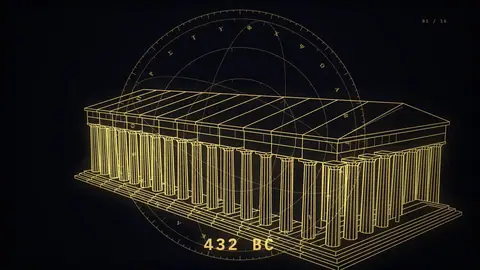
Western civilization in 2 minutes 16 seconds
vittorio (@IterIntellectus)“i asked claude to make a video on western civiization”15,294,523 views as of 22 Nov
-
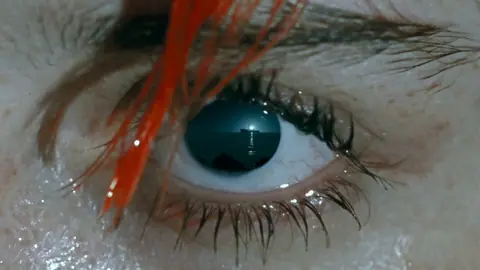
“The Clodyssey”
anabology (@anabology)Claude, another 12 hours12,576,393 views as of 27 Oct
-
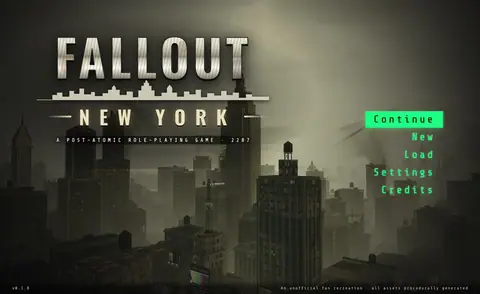
Fallout: New York, a full browser Fallout game built with Opus 5.5, zero asset files
CHRIS FIRST (@chrisfirst)3,649,272 views as of 26 Oct