Panzer Dragoon Episode 1 in WebGL by GPT-6 Astra Pro in 24 minutes (X video, Japanese)
野生の男 (@yasei_no_otoko) · 2026-09-04 · ai-made · 934,798 views
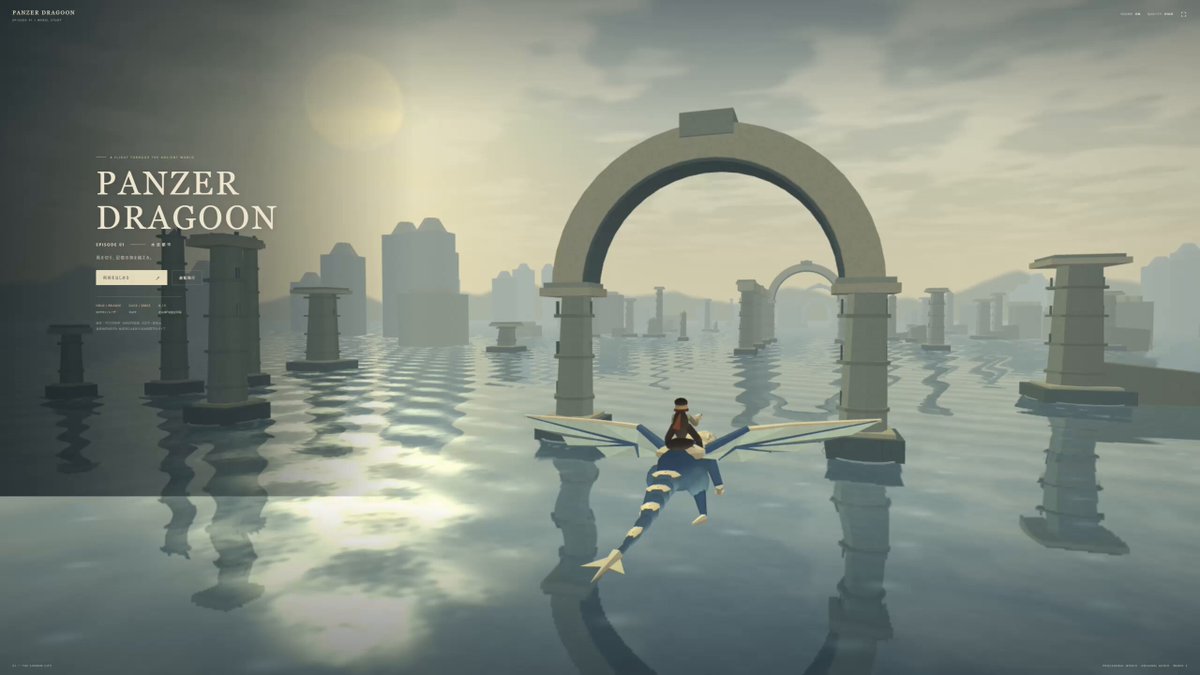
Made by AI
Model: GPT-6 Astra Pro · Series: Agent-built game or 3D world (the video shows the result)
Evidence: X post (2026-09-04): 'あのすみません…冗談でGPT-6-Astra Proに「WebGLでパンツァードラグーンのEPISODE1作って」って言ったら24分でとんでもないものが出力されたんですが‥'
Human role: Joke request ("make Panzer Dragoon Episode 1 in WebGL"); 24 minutes of output per the creator.
Pipeline: GPT-6 Astra Pro → WebGL game → 2:48 capture
What's in the video
Description written by Gemini, which watched and listened to the whole video.
Summary
This video showcases a fully playable WebGL recreation of Episode 1 of Sega’s classic rail shooter Panzer Dragoon, created by Japanese developer @yasei_no_otoko (野生の男) using OpenAI’s GPT-6 Astra Pro. Running in real time at 60 FPS in a web browser, the demo features 3D flight, multi-lock homing lasers, flying enemy swarms, and an authentic boss battle over a flooded ruins seascape.
What is shown
- [00:00] Title & Menu UI: Opening title screen reading "PANZER DRAGOON" with episode selection ("EPISODE 01: DESTINY"), difficulty setting, control instructions, and WebGL 2.0 / 60 FPS debug indicators.
- [00:08] Level Start & Environment: The armored blue dragon with rider flies forward across an expansive flooded landscape dotted with ancient pillars and sunken classical arches beneath a hazy sun and reflective water shaders.
- [00:20] Combat & Lock-on Mechanics: Flying creature waves appear; the player demonstrates flight banking, single-shot firing, and targeting reticles that paint multiple enemies to release curving blue homing laser beams.
- [00:43] Architectural Navigation: Flying through sunken colonnades, beneath monumental arches, and between water-bound towers.
- [01:16] Swarm Ambush: Navigating a narrow canal between high stone pillars while fending off incoming enemy fire and launching simultaneous homing counterattacks.
- [02:10] Formation Attacks: Engaging tight formations of flying biological enemies over open water.
- [02:22] Boss Battle: A large retro-futuristic Imperial flying gunship appears, firing spreads of glowing spherical projectiles while the dragon maneuvers and lands consecutive laser salvos.
- [02:42] Stage Clear Screen: The boss is defeated in flashes of light, triggering a "CLEAR" modal showing mission performance stats (Score, Hit Ratio: 86%).
Claims & numbers
- Generated via GPT-6 Astra Pro coding in 24 minutes (as noted in metadata and title).
- Running in WebGL 2.0 / Three.js at 60 FPS.
- Mission results: Hit Ratio 86% shown on the end-stage screen [02:42].
Notable quotes
- [00:02] (On-screen UI): "PANZER DRAGOON — EPISODE 01: DESTINY"
- [02:42] (On-screen UI): "CLEAR — EPISODE 1 CLEAR"
Assessment
A real capture of an interactive WebGL prototype created by an AI code-generation workflow. The demo accurately implements key gameplay systems—including 3D camera tracking, collision detection, locking laser algorithms, and animated low-poly assets—running directly in browser-based Three.js.
Lyrics & themes
- Format: Purely instrumental video game audio.
- Soundscape: Features orchestral/synth music paying tribute to Yoshitaka Azuma’s original 1995 Panzer Dragoon score, accompanied by arcade sound effects (lock-on chime alerts, laser discharge hums, and explosive impacts).
Lore & references
- Panzer Dragoon (1995): Direct tribute to Team Andromeda’s flagship Sega Saturn title, faithfully recreating its post-apocalyptic flooded ruin aesthetic, armored blue dragon, and multi-lock reticle system.
- GPT-6 Astra Pro: Reference to OpenAI's frontier reasoning and coding model, highlighting its ability to scaffold end-to-end 3D WebGL game loops, custom shaders, and entity state machines in rapid prompt sessions.
Visual style & craft
- Rendering & Engine: Real-time 3D WebGL rendering built with Three.js, utilizing custom GLSL shaders for planar water reflection, Fresnel effects, and wave distortion.
- Asset Aesthetic: Faithfully captures early 32-bit polygonal visuals with stylized low-poly meshes, flat shading, and volumetric fog simulating distance haze.
- AI Implementation: Demonstrates programmatic generation of shaders, flight spline math, enemy AI pathing, and particle ribbon renderers compiled into a single interactive web build.
Described by gemini-3.8-flash on 2026-10-05 from the video's audio and frames.