Claude Opus 5.5 Killed Video Editing (For Real This Time)
g russ YouTube 42,430 views as of 15 November 2026

Why it is here
Found 2026-09-29 by YouTube search “opus 5.5 tutorial” (sorted by upload date; second pass). Listed as: 32,701 views, length 15:43, published “6d ago” (date approximate).
Description
Description written by Gemini from the videoGemini 3.8 Flash, 29 September 2026
Summary
Content creator g russ tests Anthropic’s Claude Opus 5.5 on automated video editing and motion graphics workflows. He examines whether the model can generate production-ready YouTube animations—comparing prompt-only generation against reference-guided iterative revisions across Vox-style kinetic typography, low-poly Three.js 3D animations, and pure JavaScript canvas illustrations.
What is shown
- [00:00] Showcase of three distinct animation styles generated using Claude Opus 5.5: Vox-style kinetic typography, low-poly 3D scenes, and code-drawn 2D explainer animations.
- [00:46] Explanation of the 3-step testing methodology: Version 1 (Audio transcript only, no visual reference), Version 2 (analyzing reference video frames), and Version 3 (refining visual styling, motion, and assets).
- [01:13] Overview of the project Miro workspace organizing prompts, transcript references, and output clips.
- [01:54] Test 1 (Vox-Style Motion Graphics): Examining the reference reel by Vein Motion and comparing Opus 5.5’s blind attempt (Version 1) against the multi-pass reference-guided results (Versions 2 & 3).
- [02:23] Prompting interface and terminal logs showing Claude Opus 5.5 operating at “Low” reasoning effort to parse audio timestamps, generate assets procedurally, and composite frames at 9:16 aspect ratio.
- [03:13] Side-by-side comparison and DaVinci Resolve inspection of the Vox-style iterations, showcasing procedural halftone textures, lighting cones, and eyeball rotations.
- [06:04] Test 2 (Full 3D Low-Poly Scene): Taking audio and style cues from a casino short by LoadedDice, with Opus 5.5 writing procedural Three.js code to create environments, camera pans, lighting transitions, and character models.
- [07:03] Full side-by-side playback of Version 1 vs. Final Version for the 90-second low-poly casino animation.
- [09:25] Test 3 (Pure JavaScript Code Animation): Based on Emergent Garden’s “Emergent Complexity” narration and Kevin Ngo’s code-animation styling, Opus 5.5 generates JavaScript canvas scripts drawing every frame procedurally without external animation libraries.
- [10:01] Side-by-side comparison of Version 2 (“Sketchbook”) vs. Version 3 (“Illustrated”) for the Emergent Complexity animation, followed by a full timeline review in DaVinci Resolve.
Claims & numbers
- The presenter states all tests were executed on Claude Opus 5.5 set to “Low” reasoning effort (00:17).
- A 90-second low-poly 3D animation took approximately 38 to 40 minutes per iteration to generate and render (00:26, 08:42).
- The presenter notes the Vox-style motion graphics generations took approximately 10 minutes per iteration (02:26).
- The presenter claims that providing text/audio alone without visual references consistently results in unusable “straight-up slop”, whereas providing frame references allows the model to match composition and motion closely (00:39, 03:34).
- The presenter claims the third test generated complex animations frame-by-frame purely in JavaScript without third-party asset libraries or keyframe video models (15:03).
Notable quotes
- “These animations were made with Claude Opus 5.5, and today I want to show you what it can actually do for your YouTube videos.” [00:00]
- “And by the way, I ran all of these tests at low effort. That’s right, low effort.” [00:16]
- “Claude didn’t use hyperframes, any external libraries—this was purely drawn every single frame with JavaScript.” [15:04]
Assessment
This is a hands-on review and practical workflow demonstration by an independent video creator. The presenter shows actual model interactions, chat prompts, rendered code outputs, and editing timelines in DaVinci Resolve, clearly demonstrating both the limitations of zero-reference prompting and the high fidelity achieved through iterative, reference-guided prompting.
Described by gemini-3.8-flash on 2026-09-29 from the video’s audio and frames.
How AI was used to make it
AI made most of it of this video: visuals from ai-written code, subject built by ai.
- Claude Opus 5.5 generated kinetic typography, procedural Three.js low-poly 3D scenes, and frame-by-frame JavaScript canvas animations
Tools named: Claude Opus 5.5
Classified by gemini-3.8-flash from our description of the video (high confidence), 25 October 2026. How AI is used to make videos, across the whole log
Related
More videos on this
-

“Gave Opus 5.5 donald’s prompt, Midjourney, and a moodboard. 12 hours later, woke up to this”
anabology (@anabology)20,389,459 views as of 15 Nov
-
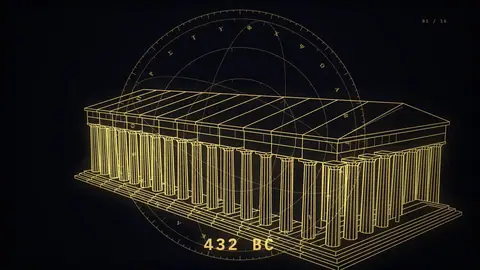
Western civilization in 2 minutes 16 seconds
vittorio (@IterIntellectus)“i asked claude to make a video on western civiization”15,294,523 views as of 22 Nov
-
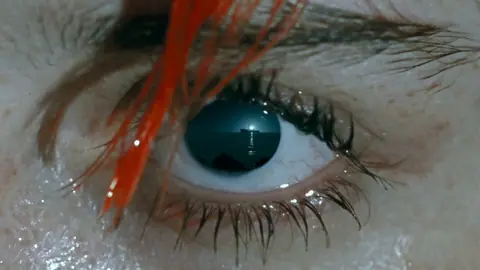
“The Clodyssey”
anabology (@anabology)Claude, another 12 hours12,576,393 views as of 27 Oct
-
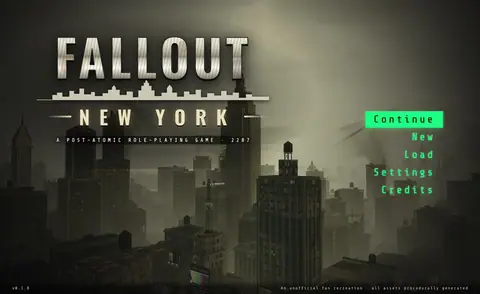
Fallout: New York, a full browser Fallout game built with Opus 5.5, zero asset files
CHRIS FIRST (@chrisfirst)3,649,272 views as of 26 Oct