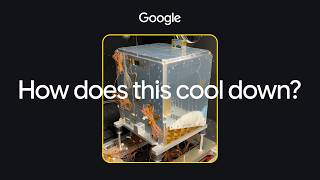
Google’s first Project Suncatcher satellite launches on SpaceX Transporter-18
Confirmed
The takeaway
On Oct 1, 2026 a SpaceX Falcon 9 (Transporter-18, 130 payloads) lifted off from Vandenberg at 11:32 a.m.
Status
- Claim
Confirmed
- Our reporting
- High confidence
- Importance
- 3 of 5
- Last verified
- 2 October 2026
Your AI and this story
- GPT-6.2 Astra123 days after its cutoff
- Claude Opus 5.593 days after its cutoff
- Gemini 4 Hydrogen184 days after its cutoff
- Grok 4.7123 days after its cutoff
None of these four assistants can know about it. The closest, Claude Opus 5.5, stops 93 days before it.
Key facts
- Launch: Oct 1, 2026, 11:32 a.m. PT, Falcon 9 Transporter-18 from Vandenberg; 130 payloads; booster’s 25th flight, landed at Vandenberg
- Payload deployment scheduled to start 54.5 minutes after launch
- Satellite: built with Planet, 4 TPUs, sun-synchronous orbit; runs a version of Gemma for 15 minutes at a time (heat management)
- Planned mission length: about one year; two more satellites to test laser links in 2027
- Suncatcher lead Travis Beals (NPR): ‘I don’t see this being cheaper in the next five years.’
- No public confirmation yet (as of Oct 2) of first contact or in-orbit TPU results
What happened
Transporter-18 launched on schedule on Oct 1, 2026 and carried Google’s Project Suncatcher pathfinder, built with Planet, to low Earth orbit. The satellite has four TPUs and will run a version of Google’s Gemma model in sessions of about 15 minutes, a limit set by heat dissipation. Its sun-synchronous orbit keeps the solar panels almost always lit. The mission is planned to run for about a year. Two satellites to test inter-satellite laser links follow in 2027.
Why it matters
This is the first time Google has put its own AI accelerators in orbit to test radiation tolerance and thermal behaviour, the first hardware step toward solar-powered orbital data centers. The project lead says it is unlikely to be cheaper than ground compute within five years.
Sources
4 sources from 4 sites. Numbers match the chips in the text.
4 sources: 1 primary, 3 press
Primary
- Google: Project Suncatcher factsblog.google, official
Press
Changes
- Filed (outcome of upcoming item Google Project Suncatcher prototype (4 Trillium TPUs, built with Planet) launches on SpaceX Transporter-18)